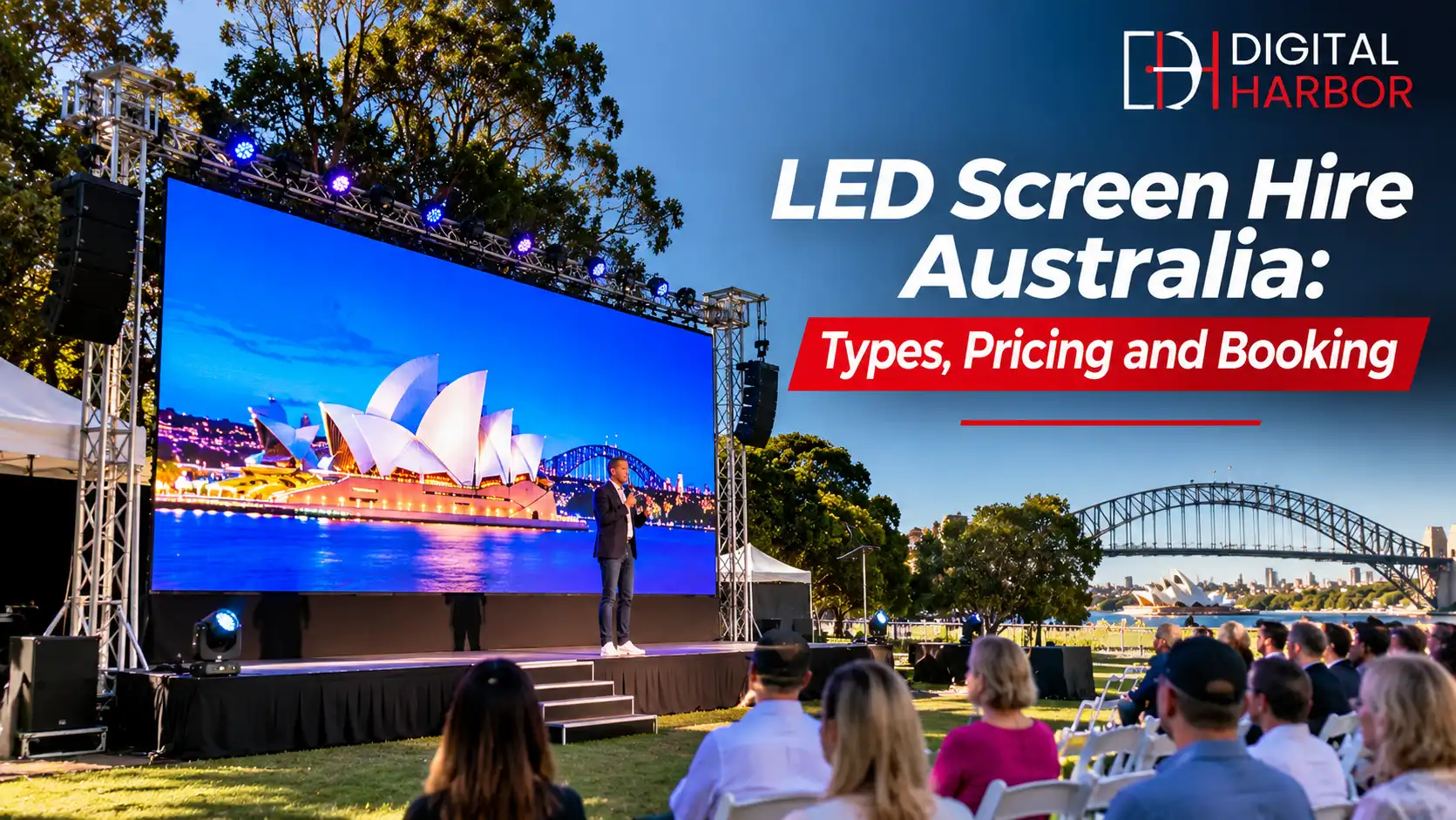
LED screen hire gives you a large, bright display for one day or a full season without buying equipment. It suits conferences, product launches, festivals, sporting events and corporate functions where the screen is needed for a short time. This guide explains what you can hire, how pricing and logistics work, and how to book the right screen for your event.
What LED Screen Hire Includes
A typical hire package covers the screen panels, the structure that holds them, the processor and playback equipment, cabling and power distribution. Most suppliers also offer delivery, installation, an on-site technician and pack-down.
Check exactly what is in the quote before you compare prices. A lower figure that leaves out rigging, power or a technician often ends up costing more once those items are added.
Types of LED Screens for Hire
The right screen depends on the venue, the audience and the content. These are the main formats available.
Indoor LED screens
Indoor panels have a fine pixel pitch and moderate brightness, which makes them ideal for conferences, expos and gala dinners. They look sharp from a few metres away and sit well alongside stage lighting.
Outdoor LED screens
Outdoor panels are brighter and weather-sealed so they stay readable in daylight. They suit festivals, sports days, community events and car parks, and they can be mounted on a truck, a stage or a ground-supported frame.
Mobile and trailer screens
Trailer-mounted screens arrive ready to raise, which makes them quick to deploy at markets, races and roadside sites. They are a good fit when there is no structure to mount a screen on.
Portable and freestanding displays
Smaller freestanding screens work for retail activations, lobbies and trade show stands. If you need a ready-made unit, see our portable display screens.
LED Screens for Events
Different events ask different things of a screen, so plan around the content and the audience.
- Conferences need a clean, high-resolution wall behind the speaker and side screens for the back of the room.
- Product launches benefit from a wide canvas that supports video and live camera feeds.
- Festivals and concerts need bright outdoor panels and robust structure for wind.
- Sports and community events use screens for live replays, scoreboards and sponsor messages.
- Trade shows and activations need eye-catching displays that fit within a stand footprint.
How to Choose the Right Screen Size
Size is driven by audience distance and venue layout. As a guide, the further back your audience sits, the larger the screen and the coarser the pixel pitch can be. Indoor events with close seating often use a finer pitch, while large outdoor events use bigger panels at a coarser pitch to keep costs down.
Share a floor plan or site photos with your supplier, along with the number of attendees and the viewing distance. A good supplier will propose a screen size and position, and confirm sightlines before the event.
Logistics: Power, Rigging and Access
Most hire problems come from logistics, not from the screen itself. Settle these points early.
Power
Large screens draw a lot of electricity, so confirm what the venue can supply. For outdoor sites, a generator with a stable output and a qualified electrician may be required.
Rigging and ground support
Screens can be flown from a roof structure, stacked on a stage or mounted on a ground frame. Each option has weight and load limits that the venue must approve. Outdoor structures need to account for wind loads.
Access and timing
Plan loading dock access, lift sizes and bump-in times. A screen that arrives after the doors open is a screen nobody sees, so build a realistic schedule with a buffer.
LED Screen Hire Pricing
Hire prices reflect the equipment, the labour and the risk of getting it to your site. These factors change the quote the most.
- Screen size and pixel pitch.
- Indoor or outdoor rating.
- Length of hire, including setup and pack-down days.
- Delivery distance and site access.
- Technicians, operators and content support.
- Rigging, power and insurance requirements.
Ask for a line-by-line quote and confirm what happens if the weather forces a change on the day. Our guide to digital signage pricing in Australia helps you read supplier quotes.
Content Tips for Hired Screens
Prepare your content early and send it in the exact resolution your supplier specifies. Keep text large and short, avoid fine detail that disappears at a distance, and test everything on the real screen before the audience arrives.
Think about what the audience actually needs from the screen. Sponsors want logos shown for long enough to be noticed, speakers want slides that are readable from the back row, and guests enjoy live footage that makes them part of the moment. Build a simple content schedule that gives each of these a share of screen time, and keep a plain holding slide ready for any pause in the program.
For live events, plan how video, slides and camera feeds switch between each other and who operates them. A short rehearsal with the technician prevents most on-the-day surprises.
How to Book LED Screen Hire
- Confirm the event date, venue and audience size.
- Decide on indoor or outdoor and the approximate screen size.
- Share the floor plan, site photos and access details with your supplier.
- Review a written quote covering equipment, labour and logistics.
- Approve the content format and the technician schedule.
- Run a site check and a test before the event.
Starting early keeps your options open and usually leads to a better price. If you want a Sydney-specific package, see our video wall hire in Sydney.
Safety, Permits and Insurance
A hired screen is a temporary structure, so safety comes first. Ask your supplier for evidence of public liability insurance, a structural plan for any rigged or ground-supported screen and a wind limit for outdoor use. Reputable suppliers will also confirm that electrical equipment is tested and tagged and that cabling is protected where people walk.
Some venues and councils require approval for temporary structures, road closures or amplified events. Check the requirements with your venue manager or local council well before the event, since approvals can take longer than the hire itself.
Questions to Ask a Hire Supplier
A short list of questions quickly separates experienced suppliers from those who only own equipment.
- What is included in the price, and what is charged as an extra?
- Will a technician stay on site for the whole event?
- What is the backup plan if a panel or processor fails?
- What resolution and file format do you need for my content?
- What happens to the booking if the weather changes?
- Can you show photos or references from similar events?
A Sample Event Timeline
Having a realistic schedule keeps the day calm. This example suits a one-day conference with a main stage screen.
The week before
Confirm the screen size and position, send final content for testing and finalise power and access details with the venue. Share the run sheet with the technician so cues are clear.
Bump-in day
The crew arrives early, builds the structure, installs the panels and calibrates the screen. Plan at least a few hours for testing with real content, including slides, video and any live feeds.
Event day
The technician runs the show and handles any last-minute content changes. A short check with the speakers or hosts before doors open avoids awkward surprises on stage.
Pack-down
Panels are removed carefully and packed for transport. Allow enough time for loading and confirm the venue's bump-out window so you are not charged for extra hours.
Common Hire Mistakes to Avoid
Most problems repeat from event to event. Booking too late limits your choice and raises the price. Underestimating the audience distance leads to a screen that is too small to read at the back. Sending content in the wrong resolution results in stretched or cropped images. Forgetting wind and weather on outdoor sites can stop an event altogether.
A clear brief, early booking and a rehearsal on the real screen avoid nearly all of these issues.
Frequently Asked Questions
How much does LED screen hire cost?
Cost depends on screen size, pixel pitch, hire duration, delivery location and whether you need a technician on site. Indoor screens cost less than outdoor-rated ones, and multi-day hire is usually cheaper per day. Send your venue, dates and screen size for a written quote.
How far in advance should I book an LED screen?
Book as early as you can, ideally four to six weeks ahead. Peak periods such as spring racing, festival season and the end of year fill quickly, and larger screens need more time for rigging and site checks.
Do you supply a technician with the hire?
Yes, on-site technicians can be included for setup, show operation and pack-down. For anything beyond a small indoor screen, having a technician present is strongly recommended.
Can an LED screen be used outdoors in the rain?
Outdoor-rated LED hire screens are built with sealed cabinets that handle rain and dust. Wind is the larger concern, so large outdoor screens need engineered ground support or rigging and a wind plan.
What do I need to supply for an LED screen hire?
You need a safe, level position or rigging points, access for the delivery truck and a suitable power supply. You also supply the content in the right resolution, or our team can help prepare it.
Hire an LED Screen With Digital Harbor
Digital Harbor supplies LED screens for events, conferences and corporate functions across Australia. Tell us your date, venue and audience, and we will propose a screen, a logistics plan and a written quote. You can also see our recent work or contact us for a free consultation.