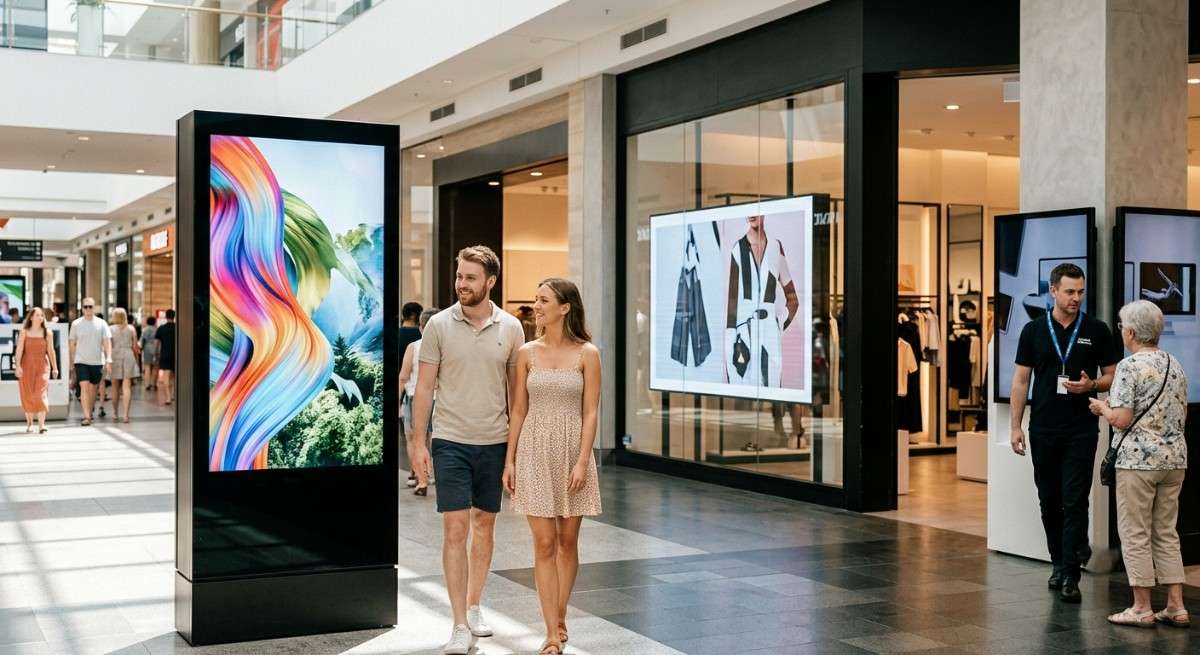
Static signs have their place, but they cannot match the flexibility, impact, and real-time control that digital displays offer. With a few clicks, you can update promotions, display announcements, share important information, or showcase dynamic content that keeps people engaged.
At Digital Harbor, we've seen how well-designed digital display solutions can transform customer interactions across retail stores, offices, healthcare facilities, educational institutions, and hospitality venues throughout Australia.
Why Digital Displays Are Becoming Essential for Australian Businesses
Walk through any major city in Australia and you'll notice digital screens everywhere. Retail windows, transport hubs, restaurants, universities, and corporate lobbies are increasingly using digital displays to communicate more effectively.
The reason is simple.
People naturally pay more attention to moving visuals than static content. Research published by Intel suggests that digital signage can increase brand awareness by more than 40%, making it one of the most effective communication tools available to businesses today.
When I first worked with businesses transitioning from traditional signage to digital systems, one of the most noticeable changes was audience engagement. Customers spent more time viewing content, interacted more frequently with promotions, and retained information better.
Key Benefits of Digital Displays
- Instant content updates
- Improved customer engagement
- Consistent brand messaging
- Reduced printing costs
- Enhanced visitor experiences
- Real-time communication capabilities
- Greater flexibility across locations
- Better visibility in high-traffic environments
These advantages make digital displays Australia organisations increasingly adopt for both customer-facing and internal communication purposes.
Understanding Different Types of Digital Displays
Not all digital displays serve the same purpose. Choosing the right solution depends on your environment, audience, and objectives.
Indoor Digital Displays
Indoor displays are commonly found in:
- Retail stores
- Shopping centres
- Corporate offices
- Universities
- Hospitals
- Reception areas
These displays are designed for controlled environments and often focus on delivering promotional content, announcements, directions, or educational materials.
Outdoor Digital Displays
Outdoor digital displays are built to withstand Australian weather conditions while maintaining visibility under direct sunlight.
Common applications include:
- Roadside advertising
- Public information systems
- Event venues
- Sports facilities
- Transportation hubs
Outdoor screens require higher brightness levels and weather-resistant construction to ensure reliable performance year-round.
Interactive Touch Displays
Interactive displays allow users to engage directly with on-screen content.
You'll often find them used for:
- Wayfinding systems
- Product catalogues
- Self-service kiosks
- Visitor information centres
- Educational environments
In my experience, interactive displays often generate significantly higher engagement because they give users control over the information they want to access.
How Digital Displays Improve Customer Experience
Think about the last time you entered a building and struggled to find your destination. A clear digital directory could have solved the problem in seconds.
This is one of the biggest strengths of modern digital displays.
They improve customer experiences by delivering relevant information exactly when it's needed.
Real-Time Communication
Businesses can instantly communicate:
- New promotions
- Event updates
- Safety announcements
- Queue management information
- Operational changes
Unlike printed materials, digital content can be updated across multiple locations simultaneously.
Reduced Information Overload
Digital displays allow businesses to rotate messages rather than overcrowding a single sign.
As a result, information becomes easier to absorb and more visually appealing.
Stronger Brand Presence
Consistent visual messaging helps reinforce brand identity.
High-quality digital content creates a more professional impression and strengthens customer trust.
Industries Benefiting from Digital Displays Australia Solutions
Digital display technology is no longer limited to large corporations. Organisations of all sizes are using digital signage to improve communication and engagement.
Retail
Retailers use digital displays to:
- Promote products
- Highlight sales
- Showcase new arrivals
- Influence purchasing decisions
I've noticed that stores with strategically placed digital screens often create a more modern shopping environment that encourages customers to spend more time browsing.
Healthcare
Hospitals and clinics use displays for:
- Patient communication
- Appointment information
- Health education
- Navigation assistance
These systems help reduce confusion while improving the overall patient experience.
Education
Schools, colleges, and universities rely on digital displays to communicate:
- Campus announcements
- Event schedules
- Emergency notifications
- Student information
The ability to update content instantly makes digital displays particularly valuable in educational settings.
Hospitality
Hotels, restaurants, and entertainment venues use displays for:
- Menu boards
- Event promotions
- Guest information
- Wayfinding support
Digital menus are especially useful because updates can be made quickly without the need for reprinting materials.
Corporate Offices
Businesses use digital displays internally to:
- Share company updates
- Display performance metrics
- Improve employee communication
- Welcome visitors
These applications contribute to stronger workplace engagement and operational efficiency.
Choosing the Right Digital Display Solution
Selecting the right display requires careful planning.
Before investing in a system, consider the following factors.
Location
Where will the display be installed?
Indoor and outdoor environments require different technologies and specifications.
Audience
Who will be viewing the content?
Understanding your audience helps determine the ideal display size, placement, and messaging style.
Content Strategy
A display is only as effective as the content it delivers.
Develop a content plan that includes:
- Promotional messages
- Informational content
- Brand storytelling
- Seasonal campaigns
- Emergency communications
Screen Visibility
Factors that influence visibility include:
- Brightness
- Resolution
- Viewing distance
- Screen orientation
- Ambient lighting conditions
Proper planning ensures your digital display achieves maximum impact.
The Role of Content in Digital Display Success
Technology alone does not create results.
The most successful digital displays Australia businesses implement are supported by thoughtful content strategies.
Keep Messages Simple
People often view displays while walking or multitasking.
Short, clear messages tend to perform best.
Use High-Quality Visuals
Professional imagery and video content significantly improve engagement.
Poor-quality graphics can undermine credibility and reduce effectiveness.
Update Content Regularly
Fresh content keeps displays relevant and encourages repeat viewing.
When I tested different content schedules, I found that regularly refreshed messaging consistently attracted more attention than static campaigns.
Maintain Brand Consistency
Colours, typography, logos, and messaging should align with your overall brand identity.
Consistency helps build recognition and trust over time.
Future Trends in Digital Displays Australia
Digital display technology continues to evolve rapidly.
Several emerging trends are shaping the future of the industry.
Artificial Intelligence Integration
AI-powered systems can personalise content based on audience demographics, time of day, and environmental conditions.
Data-Driven Content
Businesses increasingly use analytics to optimise display performance and improve engagement.
Cloud-Based Management
Cloud platforms allow organisations to manage content remotely across multiple locations from a single dashboard.
Interactive Experiences
Touchscreens, QR code integration, and mobile connectivity are creating more immersive customer experiences.
As technology advances, digital displays Australia organisations deploy will become even more intelligent, responsive, and effective.
Why Businesses Trust Digital Harbor
Implementing digital displays successfully requires more than simply installing screens.
It involves understanding audience behaviour, content strategy, placement, and long-term management.
Digital Harbor works with organisations across Australia to create display solutions that align with business goals and deliver meaningful results. From retail environments and corporate offices to educational institutions and healthcare facilities, the focus remains on creating communication systems that are engaging, reliable, and easy to manage.
The most successful digital display projects combine technology with thoughtful planning, ensuring every screen contributes to a better customer and visitor experience.