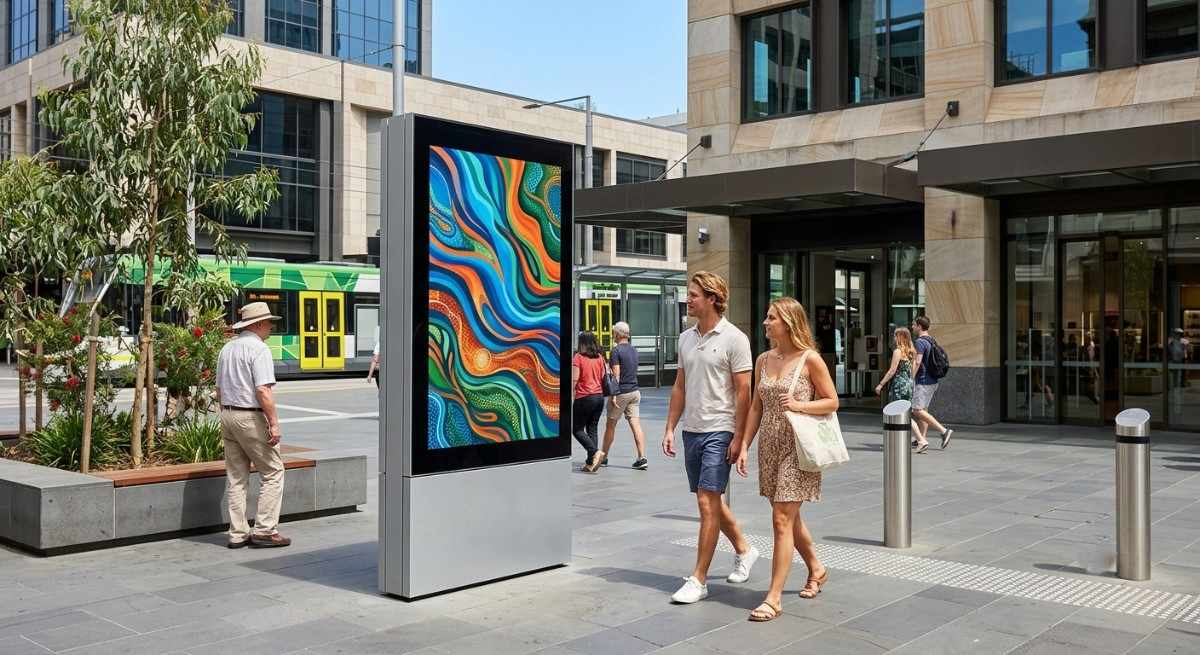
Melbourne is a city that takes aesthetics seriously. From the laneways of the CBD to the strip shopping of Fitzroy, Prahran, and Richmond, businesses here are judged on presentation before a word is spoken. Your signage is often the first impression you make. This guide will help you make it count.
Why Commercial Digital Signs in Melbourne Are a Business Decision, Not Just a Design One
Let us be honest about what traditional signage costs you over time. Design fees, printing, installation, and the waiting period every time something needs to change. A digital sign removes that entire loop.
According to research by Arbitron Inc., digital signage displays reach more than 70% of the public each week. In a city like Melbourne with its dense retail corridors and busy transit zones, that number is not abstract. It translates directly into eyeballs on your business every single day.
I've noticed that Melbourne business owners who make the switch to digital signage consistently report one thing above everything else: the ability to respond in real time. A rainy Tuesday calls for a different promotion than a sunny Saturday afternoon. Static signs cannot do that. Digital ones can, in seconds.
What Sets Commercial Grade Digital Signs Apart
The word "commercial" carries real weight here, and it is worth understanding what you are actually paying for when you invest in commercial-grade signage.
Consumer screens, the kind you buy from an electronics retailer, are built for home use. A few hours a day, controlled lighting, gentle conditions. Commercial digital signs are engineered for an entirely different life.
Here is what commercial grade actually means in practice:
- Panels rated for 16 to 24 hours of continuous daily operation without performance degradation
- Brightness levels from 2,500 to 5,000 nits or higher, maintaining readability in direct sunlight or brightly lit retail environments
- Robust thermal management systems that prevent overheating in enclosed shopfronts or outdoor installations
- Remote monitoring and management capabilities built into the hardware and software
- Warranties and service agreements designed for business-critical use, not occasional home viewing
When I tried substituting a consumer screen for a window-facing retail display early in a project, it failed within four months. The panel dimmed, the colours shifted, and it became invisible in afternoon light. The lesson was expensive but clear: commercial grade is not a marketing term. It is an engineering specification.
Types of Commercial Digital Signs Available for Melbourne Businesses
Melbourne's commercial landscape is varied. The display solution that suits a Chapel Street fashion boutique is different from what a South Yarra medical centre needs or what a Docklands corporate tower requires. Here is a breakdown of the main types.
Digital Window Signs
Ultra-bright screens designed to face outward through glass and hold their visibility against competing ambient light. On a busy Melbourne retail strip, a window display running dynamic video content will consistently outperform a printed poster. Not occasionally. Every single time.
The content rhythm matters here. Short loops, bold visuals, and a single clear message per frame. You have roughly two to three seconds to land an impression on someone walking past.
Digital Menu Boards
Melbourne's cafe and restaurant culture is world-class and intensely competitive. Digital menu boards have become standard in any venue that takes its presentation seriously. The operational flexibility alone justifies the investment.
You can run a brunch menu until noon, switch automatically to a lunch offering, then transition to dinner specials in the early evening, all without touching the screen physically. Add high-quality food photography and the impact on average order value is measurable.
Video Wall Displays
A grid of commercial panels configured to display as a single unified image or video. Video walls are making their way into Melbourne hotel lobbies, flagship retail environments, fitness club reception areas, and corporate headquarters with increasing regularity.
In my experience, the first thing a well-executed video wall does is reframe the customer's perception of the brand. It signals investment and confidence in a way that individual screens simply cannot replicate. It is the visual equivalent of walking into a room with high ceilings.
Interactive Digital Displays
Touchscreen-enabled commercial displays used for product exploration, wayfinding, customer self-service, and information delivery. Melbourne's growing retail and healthcare sectors are deploying these to both reduce staff pressure and improve the customer experience simultaneously.
Outdoor and Portable Digital Signs
Victoria's weather is famously unpredictable. Outdoor commercial digital signs for Melbourne need to be engineered accordingly, with solid weatherproofing ratings, anti-glare treatment, and brightness levels that hold up against both overcast skies and direct summer sun.
Portable display units are popular with drive-through operators, outdoor hospitality venues, and event-based businesses that need flexible positioning without permanent installation.
How to Evaluate a Commercial Digital Signage Provider in Melbourne
The screen is only one component of what you are buying. The provider relationship, the software ecosystem, and the post-installation support structure are equally important. Here is a practical checklist to use when comparing your options:
- End-to-end capability. Does the provider handle everything from site assessment and hardware selection through to installation, content setup, and ongoing support? Fragmented arrangements create accountability gaps.
- Content management platform. You should be able to update your signs remotely without needing technical help. Ask to see the platform live before committing.
- Real Melbourne or Australian installations. Any credible provider will show you actual photos of completed commercial projects. If they only show renders and stock imagery, ask why.
- Support response times. A commercial digital sign is a working asset. If it goes dark during a busy trading period, how quickly can they respond? Get this in writing.
- Customisation depth. Your space has specific dimensions, lighting conditions, and audience flow patterns. The right provider will assess these rather than offering a one-size-fits-all package.
Digital Harbor approaches every Melbourne project with exactly this level of detail. The consultation process is built around understanding the specific environment and business objective before any hardware recommendation is made.
Where Commercial Digital Signs Deliver the Strongest Results in Melbourne
CBD and Southbank Commercial Precincts
High foot traffic, corporate audiences, and premium surroundings mean that screen quality and content execution both need to be at their best. This is not the environment for budget panels or generic content templates. Every detail is visible and every detail is judged.
Inner-City Retail Strips
Chapel Street, Brunswick Street, Smith Street, High Street. These corridors are dense with competing businesses and style-conscious shoppers. Window displays and in-store digital signage in these locations need to be visually compelling and content-fresh on a regular cycle.
Suburban Shopping Centres
High volume, time-poor customers, and a clear promotional environment. Digital signs here need to communicate quickly and clearly. Offer-led content, bold typography, and clean layouts outperform anything too clever or complex.
Hospitality Venues Across Melbourne
From CBD wine bars to suburban pizza joints, Melbourne's food and drink scene has embraced digital menu boards as a standard part of fit-out. I've noticed that venues which combine good digital menu design with smart content scheduling consistently see improvement in their average transaction values.
Healthcare and Allied Health Practices
Waiting rooms in GP clinics, specialist practices, and allied health centres across Melbourne are using digital displays to share relevant health information, promote services, and reduce the psychological weight of waiting. When the content is genuinely useful, patients notice and appreciate it.
Getting the Most From Your Commercial Digital Sign Investment
Buying the right hardware is the foundation. What you build on top of it determines your actual return.
Content consistency matters more than most people expect. A screen refreshed with new content monthly performs significantly better than one left running the same loop for six months. Build a simple content calendar and treat it like any other marketing activity.
Brightness and environment matching is non-negotiable. A screen that is too dim for its location is worse than no screen, because it suggests a business that does not pay attention to detail. Get the specification right for the actual conditions.
Use scheduling from day one. Morning content, lunchtime content, evening content. This level of targeting is built into modern commercial digital signage software and it costs nothing extra once you are set up. Digital Harbor's platform makes this straightforward to configure and manage remotely across single or multiple locations.
Review performance regularly. If a digital sign is promoting specific products or offers, track whether those items are moving. Adjust content based on what the data tells you, not what looks good in isolation.