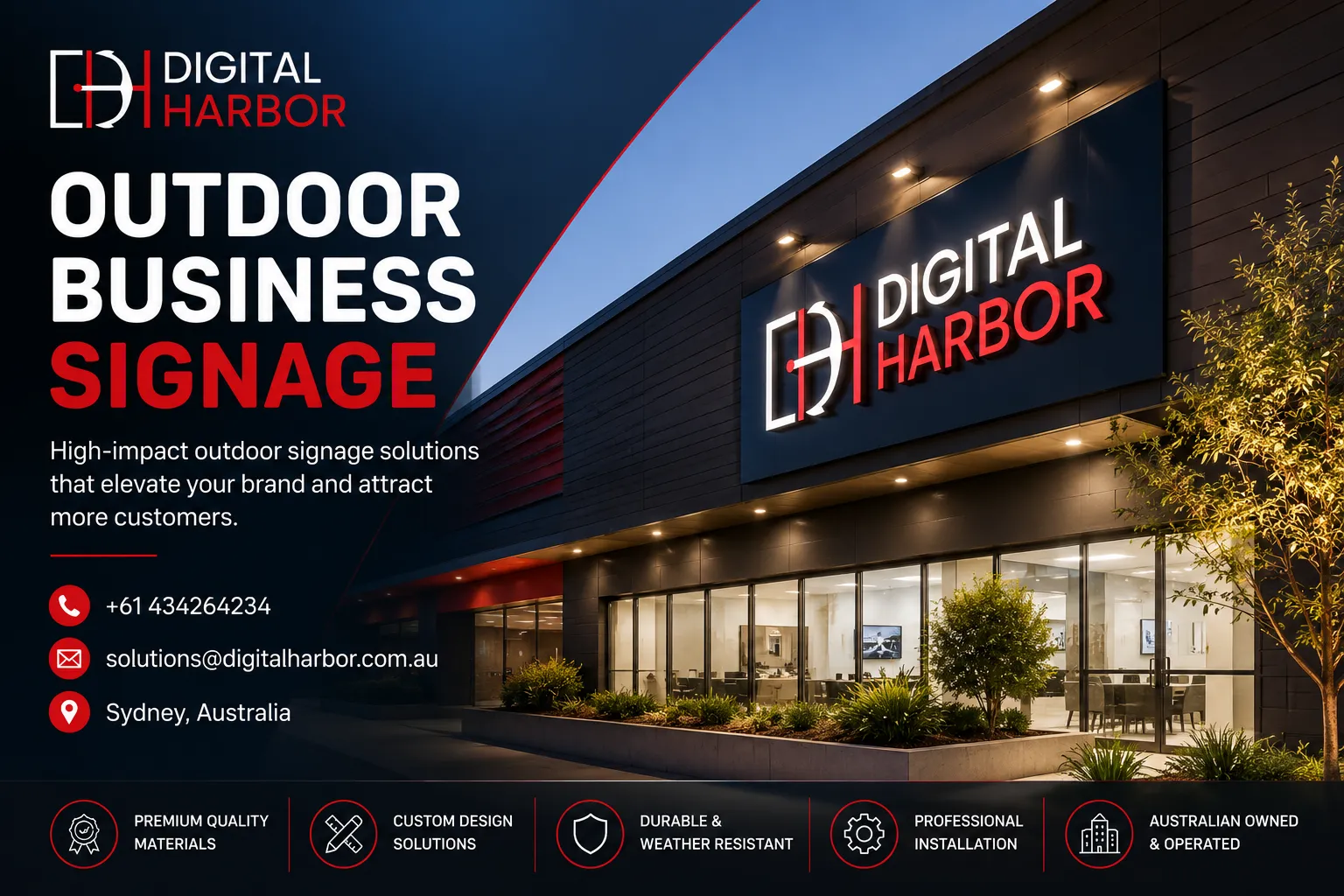
Whether you are a retailer in Sydney, a hospitality venue in Melbourne, or a corporate office in Brisbane, outdoor digital signage can turn your storefront into a 24/7 marketing asset. This guide covers everything you need to know about outdoor business signage, from benefits and features to installation considerations and common mistakes to avoid.
What Is Outdoor Business Signage?
Outdoor business signage refers to any visual display placed outside a commercial property to promote a business, product, or service. Traditional options include painted walls, vinyl banners, and illuminated box signs. Today, many businesses prefer outdoor digital signage, which uses LED screens to display dynamic content that can be updated remotely.
Digital out-of-home (DOOH) now accounts for 76.6% of total OOH revenue in Australia, up from 74.9% in 2024 . This shift reflects a growing preference for flexible, data-driven signage that can adapt to different audiences, times of day, and weather conditions.
Why Invest in Outdoor Digital Signage?
The benefits of outdoor digital signage extend well beyond aesthetics. When done right, it delivers measurable returns.
Drives foot traffic. Research shows that 70% of customers say digital signage influences their purchasing decisions . The right message at the right time can bring people through your doors.
Provides real-time flexibility. With a content management system, you can update your outdoor digital sign in minutes. Weather changes, flash sales, or event announcements can go live instantly without printing costs.
Saves money long-term. Traditional print signage requires ongoing production, shipping, and disposal costs. Digital signage eliminates these recurring expenses, reducing operational costs significantly over time .
Supports sustainability goals. LED signage consumes much less energy than fluorescent alternatives. One South Korean study found that replacing fluorescent signs with LED alternatives could reduce energy consumption by approximately 74% . This aligns with growing business focus on reducing carbon footprints.
Boosts ad recall. According to industry data, retailers experienced a 52% boost in ad recall rates after implementing digital signage . People remember what they see on bright, engaging screens.
Key Features of Effective Outdoor Business Signs
Choosing the right outdoor business signage involves understanding what makes a display effective in real-world conditions.
High Brightness for Daylight Visibility
This is non-negotiable. Outdoor screens need sufficient brightness to remain visible in direct sunlight. Look for displays rated at 2,500 nits or higher for storefront windows, and 5,000 to 10,000 nits for billboards visible from a distance . Without adequate brightness, your outdoor digital sign becomes invisible during peak daylight hours.
I've noticed many businesses initially choose indoor-rated screens for outdoor use to save money. Within weeks, they realise the mistake. The display looks washed out, and passersby can't read the message. Paying more for proper brightness upfront prevents disappointment later.
Weather Resistance and Durability
Australian conditions vary greatly from humid Queensland summers to cold Victorian winters. Your outdoor business signage needs an IP rating indicating protection against dust and water. Look for IP65 or higher for areas exposed to rain.
The enclosure should handle temperature extremes. Many commercial outdoor digital signs include built-in cooling systems to prevent overheating. Some include heating elements for colder climates.
Front Stereo Sound Integration
Audio can amplify your message significantly. Quality front-facing speakers create an immersive experience, especially in shopping precincts or high-footfall areas. However, check local council regulations regarding sound levels before installation.
Remote Management and Mobile Control
Modern outdoor digital signage includes mobile app control, allowing you to adjust content, brightness, and schedules from anywhere. This feature has become essential for businesses with multiple locations or limited technical staff.
One thing I've learned is that the software interface matters as much as the hardware. You could have the best screen on the market, but if updating content is complicated or slow, you won't use it effectively. Choose a system with intuitive remote management.
GPS Anti-Theft Protection
Outdoor displays face theft and vandalism risks. Built-in GPS tracking with instant alerts provides peace of mind. This feature is particularly valuable for temporary installations or displays in isolated locations.
Popular Types of Outdoor Digital Signage
Different business needs call for different configurations.
| Signage Type | Best For | Key Considerations |
|---|---|---|
| Window Digital Displays | Retail stores, showrooms, restaurants with street-front windows | Ultra-bright screens to combat glare; slim form factor for window mounting |
| Free-Standing Kiosks | Shopping centres, event spaces, outdoor malls | Self-contained units; require stable power and internet connectivity |
| Digital Billboards | High-traffic roads, highways, public spaces | Large-scale; requires council approval and structural certification |
| Transport and Street Furniture | Bus shelters, train stations, airport terminals | High durability; often part of council contracts |
| Video Walls | Corporate lobbies, large retail spaces, stadiums | Multiple screens tiled together; high visual impact |
A Step-by-Step Process for Installing Outdoor Business Signage
Installing outdoor digital signage involves more than picking a screen and hanging it up.
1. Define your objectives. Determine what you want to achieve. Is it foot traffic, brand awareness, or promoting specific products? This decision shapes everything that follows, including where to position your outdoor business signage.
2. Conduct a site audit. Assess the location. Consider viewing distance, sunlight exposure, power availability, and structural support. Mounting a large outdoor digital sign requires a properly engineered structure.
3. Check local council regulations. Council approvals are often required for commercial signage. Rules vary by council regarding size, illumination, animation, and placement . Some local laws also restrict flashing content or reflective materials to prevent driver distraction.
In my experience, this step gets overlooked more than any other. I've worked with businesses that purchased and installed signage only to receive compliance notices weeks later. Check council requirements before placing an order.
4. Select hardware and software. Choose displays that match your environmental and brightness requirements. Select a content management system that you can easily learn and use.
5. Professional installation. Use experienced installers who understand electrical and structural requirements. Incorrect installation can void warranties and create safety hazards.
6. Test and optimise. Run the display for a few days. Adjust brightness, content placement, and scheduling based on real-world visibility.
Common Mistakes to Avoid with Outdoor Digital Signs
Choosing the wrong brightness level. Many businesses underestimate how much brightness is needed for outdoor visibility. A screen that looks fine indoors will appear dark and unreadable in direct sunlight.
Ignoring energy consumption. Operating a large outdoor digital sign can generate significant electricity costs. Energy-efficient displays with common cathode technology can reduce power consumption by up to 50% compared to traditional designs .
Overlooking maintenance. Outdoor screens face dust, moisture, and temperature changes. Regular cleaning and inspection prevent performance degradation.
Neglecting content strategy. A great screen is wasted without compelling content. Updating your outdoor digital sign regularly keeps messages fresh and engaging.
Failing to plan for remote management. If your signage software doesn't allow remote updates, you will waste time and resources physically visiting each screen to change content.
Outdoor Business Signage Across Australian Cities
Regulations vary across states and territories. Here is what to consider in key locations.
Sydney
The City of Sydney has specific development control plans for signage. Digital signs must comply with requirements regarding size, animation, and illumination. Many heritage areas impose additional restrictions. Working with experienced local suppliers like Digital Harbor helps navigate these requirements.
Melbourne
Melbourne's planning scheme regulates advertising signs. The city has distinct character precincts with different rules. Premium retail areas like Collins Street allow more flexibility, while suburban and heritage areas have tighter restrictions.
Brisbane
Brisbane City Council requires approvals for most commercial signage. Key considerations include public safety, traffic visibility, and visual amenity. Signs near transport corridors face additional scrutiny.
Perth
Perth's local governments generally support commercial signage but require compliance with Australian standards. Digital signs must meet structural safety requirements and brightness limits to prevent light spill.
Adelaide
Adelaide councils require permits for outdoor business signage. Temporary signs have specific conditions, including maximum area of 2 square metres per site and limits on display duration . Many councils also require public liability insurance of at least $20 million for installed signage .
The Future of Outdoor Digital Signage
The line between physical and digital marketing continues to blur. Phygital OOH, which connects offline screens with online engagement, is gaining traction . For example, QR codes displayed on outdoor business signs can lead customers to online content, promotions, or social media interactions.
Programmatic DOOH is also growing. Media buyers can now purchase outdoor digital signage inventory using data-led precision similar to online advertising . This allows real-time targeting based on location, audience behaviour, and time of day.
Key Takeaways
-
Outdoor business signage drives real customer engagement and sales.
-
Digital out-of-home continues to grow in Australia, reaching $1.449 billion in 2025.
-
High brightness, weather resistance, and remote management are essential features.
-
Check local council regulations before installing any outdoor digital sign.
-
Energy efficiency features reduce operating costs and support sustainability.
-
Content strategy matters just as much as hardware selection.
Final Thoughts
Investing in quality outdoor business signage is one of the smartest decisions a business can make to attract customers and build brand visibility. I've seen businesses of all sizes benefit from well-designed outdoor digital signage that matches their location, audience, and budget.
If you're considering outdoor signage for your business, work with experienced professionals who understand both the technical and regulatory sides. Digital Harbor offers custom outdoor signage solutions across Sydney, Melbourne, Brisbane, Perth, and Adelaide, helping businesses turn their storefronts into powerful marketing assets.