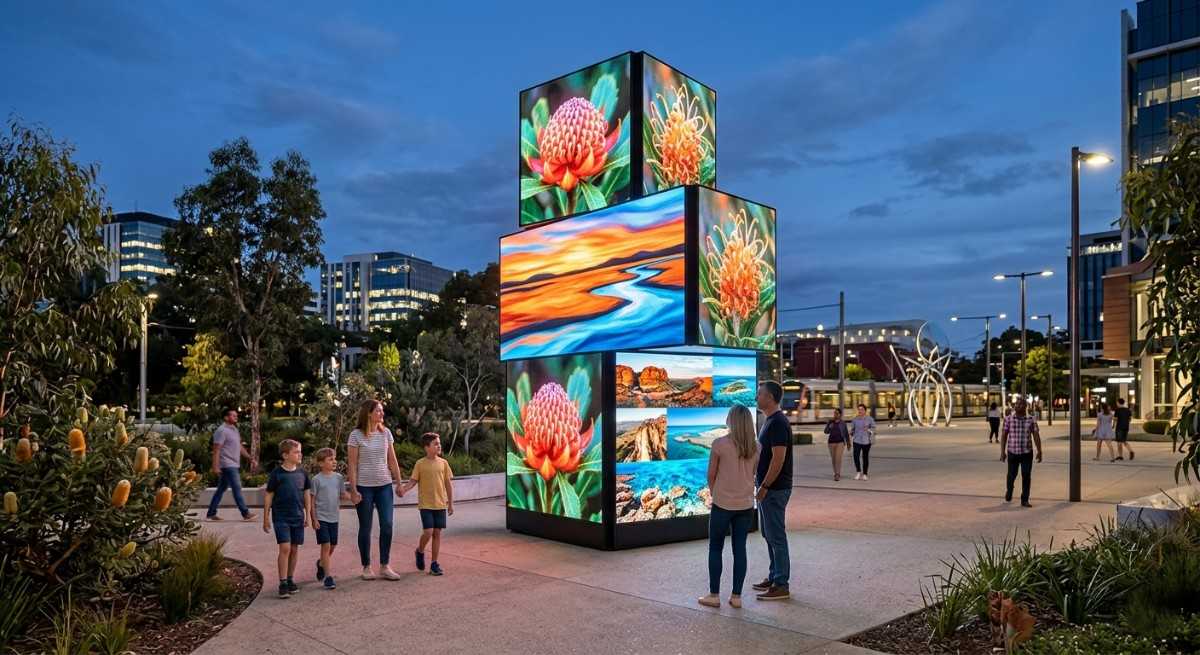
That's the power of LED signs Australia businesses are using to stand out.
When I first started working with digital displays, I thought any bright screen would do the trick. I was wrong. Australia is a big place. What works in Darwin might fail in Hobart. The sun in Perth is different from the sun in Sydney. Humidity changes everything.
I've installed hundreds of LED signs now. From suburban fish and chip shops to major car dealerships. And I've learned exactly what works across this massive, beautiful, challenging country.
The Problem With Old School Signs
Let's be honest. Static signs are boring. They just sit there. Same message. Day after day. Week after week.
Here's what happens.
People stop seeing them. It's called banner blindness. Your brain learns to ignore things that don't change. A static sign becomes part of the background furniture.
They fade in the sun. Australian UV destroys printed vinyl within months. Red turns pink. Black turns grey. Your brand starts looking tired even though your business is thriving.
You can't react quickly. Running a flash sale that ends at 2pm? Too bad if you printed it. That sale stays up all day. Customers get confused. You lose trust.
They take up storage. Boxes of old banners. Different sizes for different seasons. Labels fall off. Total mess.
I've noticed that businesses using LED signs Australia skip all that nonsense. They change their message in seconds. From a phone. While sitting anywhere with an internet connection.
A small bakery in Adelaide switched to a digital window display. They started showing their fresh bread coming out of the oven. Real time. People started timing their visits. That never happened with a static board.
What Makes LED Signs Different From a Regular TV
I still see businesses trying to save money by putting a consumer TV in their window. Under an eave. "Protected" they tell me.
Then they call six months later because the screen has gone weird. Pink patches. Dead pixels. Won't turn on.
Here's the truth. A TV from a department store is designed for your lounge room. Dark room. No direct sun. No humidity. No one touching the screen.
LED signs Australia are built differently from the ground up.
Commercial Grade Panels
These run 24 hours a day, 365 days a year without burning out. Consumer TVs expect to be off for eight hours overnight. Leave them on continuously and they die young. I learned this after replacing three lounge room TVs that a client used as menu boards in their cafe.
High Brightness Backlights
An indoor screen gives you 300 to 500 nits. That's fine for a shopping centre. Useless in direct Australian sun.
Proper LED signs for outdoor or window facing spots start at 2500 nits for shaded areas. Full sun exposure needs 4000 nits or higher. I tested a 1500 nit screen in a north facing window in Brisbane once. By 10am you couldn't read a thing.
Thermal Management
Australia gets hot. Screens generate their own heat too. That heat has to go somewhere.
Quality units have thermostatically controlled fans. Some also have internal heaters for the rare cold morning in places like Canberra or Tasmania. An LCD panel can freeze below zero. When it freezes, it stops working until it thaws.
Weather Sealing
Different cities have different enemies. Humidity in Brisbane and Darwin. Dust in Perth and Adelaide. Rain everywhere.
Proper LED signs have IP65 ratings or higher. That means dust tight and protected against water jets. No moisture gets in. No dust either.
Where LED Signs Work Best Across Australia
I've installed these in every major city. Each location taught me something.
Retail Storefronts
A clothing shop on Chapel Street in Melbourne put up a window facing LED sign. They loop 15 second clips of people actually wearing their outfits around the city. Real customers. Real streets.
The owner told me people stop, point at the screen, and walk in asking for "the jacket from the video." That never happened with printed posters.
Restaurants and Cafes
A ramen place in the Sydney CBD added a digital menu board facing the footpath. They show steaming bowls of broth. Close ups of noodles. A timer counting down to lunch specials.
Average order value increased because people kept adding dishes they saw on screen. Visual hunger is real.
Car Dealerships
Used car lots love LED signs. Rotate through inventory. Highlight monthly specials. Play testimonials from happy customers.
A dealer in Moorooka, Brisbane put up a large LED display facing the main road. He told me he got calls specifically about cars people saw on the sign within the first week.
Gyms and Fitness Centres
A 24 hour gym in Bowen Hills, Brisbane uses LED signage to show class schedules, trainer shout outs, and motivational quotes. Members check it when they walk in. No more "what time is yoga?" at the front desk.
Schools
A primary school in Kenmore, Brisbane installed an LED notice board near the front gate. Morning drop off messages. Event reminders. Lost hat alerts. Parents actually read it because it changes daily.
Medical Centres
A clinic in Richmond, Melbourne installed an outdoor display showing wait times, flu shot availability, and after hours contacts. Walk ins dropped because people could see exactly when to come back. Sounds counterintuitive. But the clinic manager said their lobby got less crowded and patient satisfaction went up.
The Features That Actually Matter
When I talk to business owners, they get lost in specs. Refresh rates. Pixel pitch. Colour gamut. Most of that doesn't matter for a simple storefront sign.
Focus on these instead.
Remote Content Management
You should never need to plug a USB stick into your sign. Ever.
A proper system lets you update from anywhere. Phone. Tablet. Laptop. One login. All your screens. Publish once or schedule differently for each location.
I once updated a client's sign while waiting for a train at Central Station in Sydney. Took 90 seconds. The new promotion started showing before I reached my stop.
Automatic Brightness Sensor
A sign that's blinding at 10pm is annoying. A sign that's invisible at noon is useless.
LED signs Australia with light sensors adjust themselves. Bright during the day. Dim at night. No one touches anything. Your neighbours stay happy. Your message stays visible.
Scheduling
Set it and forget it.
Breakfast menu from 6am to 10:30am. Lunch menu after that. Happy hour specials at 4pm. Sunday hours different from Monday. The sign changes automatically. You never think about it.
GPS Anti Theft (Optional)
Sounds paranoid until a sign goes missing. Then you wish you had it.
We offer this as an add on for street level displays. Real time tracking. Instant alerts if someone moves the screen. Peace of mind.
Common Mistakes I See With LED Signs Across Australia
After hundreds of installs, these are the screw ups that keep happening.
Buying on price alone. The cheapest quote wins. Then the sign fails. Then you call us anyway. Now you've paid twice.
Mounting in the wrong spot. Too high. Too low. Facing the afternoon sun directly. We do a site visit before installation. Not after.
Forgetting about night mode. A bright sign at 2am annoys neighbours and might break local council rules. Auto dimming solves this. Skip it at your own risk.
No backup plan. Your internet goes down. Does your sign go blank? Good systems keep playing cached content until connection returns.
Skipping professional installation. I've fixed so many DIY jobs. Leaky seals. Loose mounts. Wires exposed to weather. Pay once. Cry once. Then sleep well.
"The LED signs that last in Australia are the ones where someone thought about the local environment during installation. Not just brightness and resolution. Humidity, dust, and temperature swings are all different depending where you are." Alex, Lead Technician at Digital Harbor
LED Signs vs Traditional Lightboxes vs Digital Billboards
People mix up these terms. Here's the simple breakdown.
| Type | Best For | Typical Size | Viewing Distance |
|---|---|---|---|
| LED signs | Storefronts, menus, lobbies | 32 to 65 inches | 2 to 15 metres |
| Traditional lightboxes | Simple backlit displays | Various | 2 to 10 metres |
| Digital billboards | Major roads, large audiences | 3 metres and up | 30 to 100 metres |
For most Australian small to medium businesses, an LED sign between 43 and 55 inches is the sweet spot. Big enough to see from across the street. Small enough to fit under an awning. Affordable enough to make sense.
Lightboxes are cheaper upfront but you pay every time you change the graphic. LED costs more initially but each content change is free. Do the math over three years.
What About Different Australian Climates?
Here's what I've learned about each region.
Sydney and Brisbane need good humidity protection and high brightness for sunny days.
Melbourne and Canberra need wider temperature tolerance. Four seasons in one day is real.
Perth and Adelaide need excellent dust sealing and heat management.
Darwin and far north Queensland need tropical grade humidity protection and corrosion resistant components.
Hobart and Tasmania need internal heaters for cold mornings and frost protection.
The good news? We stock different hardware for different regions. One size does not fit all.
A Quick Story About a Fish and Chip Shop
I'm not naming names, but this one still makes me smile.
A fish and chip shop near the water in Wynnum, Brisbane had a tiny static board out front. Hand written. Hard to read. They were doing okay but nothing special.
They asked us to install a small LED sign. Nothing fancy. Just bright enough for afternoon sun.
The first week, they showed their daily specials. Second week, they added a photo of the actual catch that morning. Third week, they started a "weather roulette" discount. If it rained within an hour of your purchase, you got money off next time.
People started coming from other suburbs. Just to see what was on the screen that day. The owner told me her Saturday lunch trade almost doubled within three months.
That's not the screen doing magic. That's the screen giving her permission to be creative.
Ready to Make Your LED Sign Work Harder?
You've read the facts. You know what survives Australian weather and what doesn't. You understand which features actually matter.
Now you just need someone who won't disappear after the sale.
Digital Harbor handles everything. Site assessment. Hardware selection. Professional installation. Ongoing support. And a real person answers the phone when you call. No phone trees. No "your call is important to us." Just help.
We serve Sydney, Melbourne, Brisbane, Perth, Adelaide, and surrounding areas. Wherever you are in Australia, we can help.
Let's talk about what your sign could say tomorrow that it can't say today.
+61 434264234 / Sydney, Australia