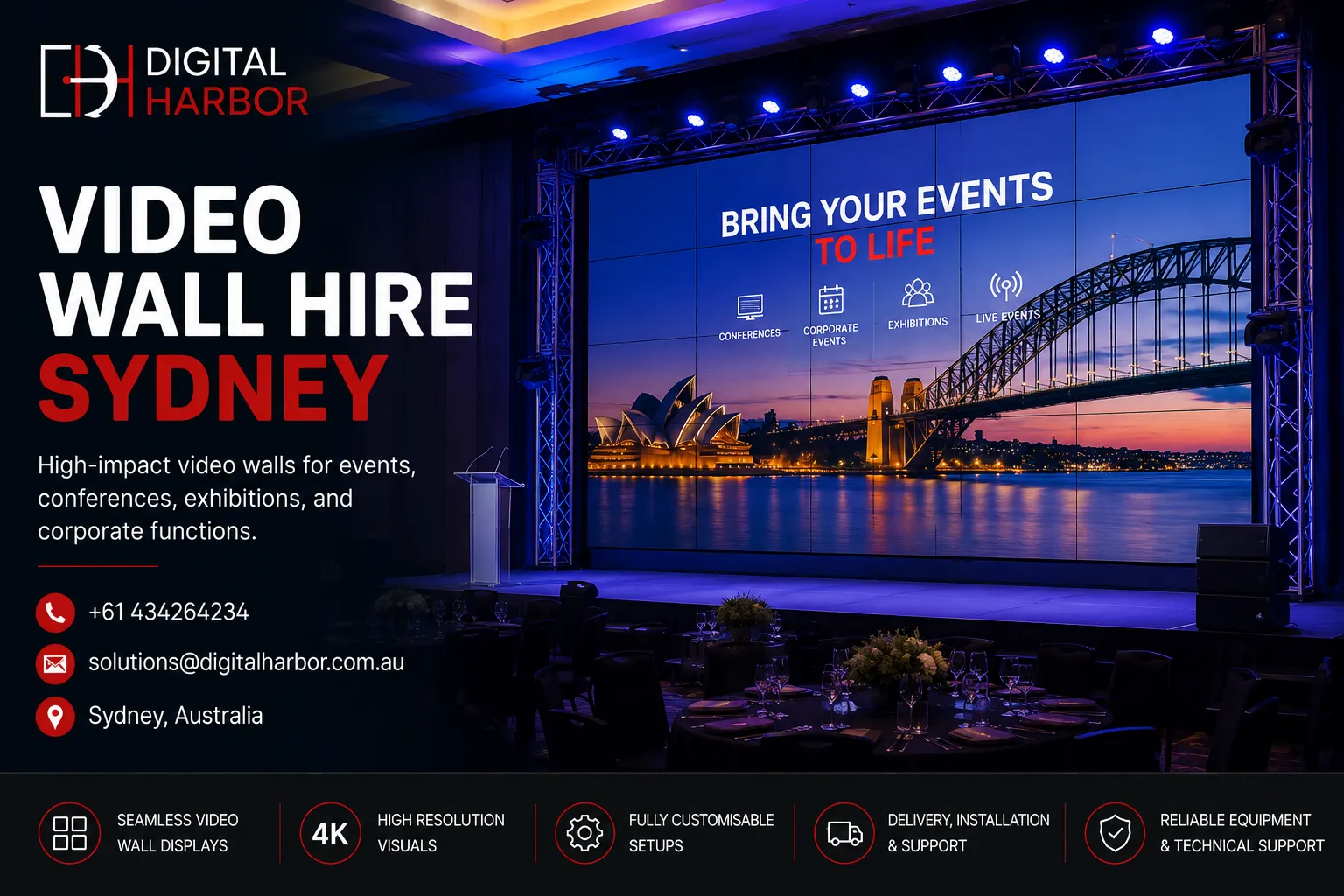
The digital display market continues to expand. According to Grand View Research, the global digital signage market was valued at over $20 billion in 2024 and is projected to grow at a compound annual growth rate of 7.6% through 2030 . Video walls represent a significant portion of this growth, particularly in event, retail, and corporate settings.
What Is a Video Wall and Why Hire One?
A video wall is a collection of screens arranged in a grid formation to create one large display. The screens work together to show a single image or video across the entire surface. Some configurations allow each screen to show different content simultaneously.
Why hire instead of buy? Video walls represent significant investment. High-quality advertising screens cost thousands of dollars per unit, and a typical wall uses four to sixteen screens. For most businesses and event organisers, renting makes more sense for temporary needs.
Hiring also gives you access to larger, higher-resolution displays than you could justify purchasing. And you avoid the technical headaches of installation, configuration, and dismantling - the hire company handles everything.
Types of Video Walls
LED Video Walls
These use light-emitting diodes to produce images. They work in any lighting condition, including direct sunlight. LED video walls are ideal for outdoor events and large indoor spaces.
LCD Video Walls
These use liquid crystal display technology. They work best indoors and offer excellent colour reproduction. LCD walls are common in corporate lobbies, retail stores, and conference venues.
Projection Video Walls
Multiple projectors blend together to create one seamless image. These work in very large spaces but require controlled lighting conditions.
Curved Video Walls
Screens arranged in a curve to wrap around an audience. These create immersive experiences and are popular at trade shows and product launches.
When to Hire a Video Wall
Corporate Events
Annual general meetings, product launches, and internal conferences all benefit from video walls. Display keynote presentations, live video feeds, and branded content across multiple screens.
Trade Shows and Exhibitions
A video wall attracts attention in crowded exhibition halls. Showcase product demonstrations, company videos, or social media feeds. The visual impact draws people to your booth.
Retail Activations
In-store advertising screens create immersive brand experiences. Video walls in shopping centres, pop-up stores, and flagship locations drive engagement and sales.
Live Events
Concerts, festivals, and sporting events use video walls to show content to large audiences. Live feeds, replays, and sponsor messages all work effectively on video walls.
Weddings and Celebrations
Weddings increasingly feature video walls. Display photo montages, live social media feeds, or simply create a stunning backdrop for the dance floor.
Product Launches
When Apple unveils a new product, they use a video wall. It's effective. Show your product in high definition from multiple angles. Display testimonials and technical specifications.
Video Wall Technology Explained
Resolution
The number of pixels determines image quality. Higher resolution means sharper images. For large video walls, pay attention to pixel pitch - the distance between pixels. Smaller numbers mean higher resolution.
Brightness
For indoor advertising screens, 500-1,000 nits usually suffices. Outdoor screens need 2,500-10,000 nits to remain visible in sunlight.
Refresh Rate
This matters for fast-moving content. Higher refresh rates (measured in Hertz) produce smoother motion. Sports events and live video need higher refresh rates than static displays.
Bezel Size
The gap between screens. Smaller bezels create a more seamless appearance. For advertising screens where image continuity matters, narrow bezels are essential.
Content Management
The software that controls what appears on your video wall. You need systems that allow easy content upload, scheduling, and switching between different content types.
One thing I've learned from coordinating video walls for events - test the content management system before the event. During a large conference in Sydney, we discovered the system couldn't handle the video format we'd prepared. We wasted hours converting files. Now I always test thoroughly in advance.
Step-by-Step Guide to Video Wall Hire
Define your objectives. What do you want to achieve? Brand awareness? Product promotion? Immersive experience? Different objectives require different configurations.
Determine the space. Measure your available area. Consider viewing distance - the audience needs to be far enough to see the whole wall but close enough to read content.
Choose the technology. Indoor or outdoor? LED or LCD? Curved or flat? Your hire provider can recommend based on your specific situation.
Select content. What will you display? Video? Slideshows? Live feeds? Social media? Your content shapes the technical requirements.
Arrange delivery and installation. Professional installers ensure everything works. Mounting video walls requires careful engineering.
Test thoroughly. Run your content through the system. Check at different times of day if lighting varies. Verify all screens display correctly.
Plan for the event. Who operates the video wall? How do you switch content? Who handles troubleshooting? Plan these details in advance.
Dismantle and collection. The hire company typically handles dismantling. Confirm this before you confirm the booking.
Common Video Wall Hire Mistakes
Underestimating content needs. Video walls show high-resolution content. Low-quality images look terrible at large scale. Your content must be specifically designed for video wall display.
Ignoring viewing angles. People see video walls from different positions. Ensure screens maintain image quality from all key viewing angles.
Insufficient brightness. Indoor advertising screens used in bright spaces become unreadable. Check ambient light levels and choose appropriate screens.
Forgetting about audio. Video content often includes sound. Plan for speakers and ensure audio synchronises with visuals.
No backup plan. Technology can fail. Have backup content ready. Know how to switch to a simpler display if problems occur.
Poor placement. A video wall in the wrong position loses impact. Consider traffic flow, sightlines, and focal points. A well-placed video wall becomes the centre of attention.
Video Wall Hire for Different Events
Corporate Conferences
A central video wall displays keynote presentations. Smaller walls in breakout rooms show session content. The main stage wall often incorporates live video feeds and participant content.
Product Launches
The video wall becomes the hero. Display product specifications in high resolution. Show promotional videos. Use social media feeds to create engagement.
Retail Pop-ups
Shopping centres and temporary retail spaces use video walls to attract attention. Advertising screens show product demonstrations and create an immersive brand environment.
Live Performances
Concerts use video walls to enhance the show. Display live video, visual effects, and sponsor messages. The wall becomes part of the overall production.
From what I've observed, the best video wall installations incorporate the display into the overall event design. A video wall doesn't just show content - it becomes part of the environment.
Video Wall Content Tips
Keep it simple. Video walls display large images. Complex visuals can overwhelm. Focus on one message at a time.
High resolution only. Standard definition video looks terrible on a video wall. Use 4K content when possible. Upscale lower resolution content before displaying it.
Consider aspect ratio. Video walls create non-standard aspect ratios. Design content specifically for your configuration. Don't stretch standard content to fit.
Use motion sparingly. Constant movement creates visual fatigue. Combine static images, subtle animations, and video for the best effect.
Match content to audience. Corporate audiences expect professional, clean design. Event audiences appreciate playful, dynamic content.
When I worked with a retail client, they wanted to show multiple products simultaneously on their video wall. The result was cluttered and confusing. We switched to one product at a time, displayed in high resolution, and customer engagement improved significantly.
Digital Advertising Screens and Their Role
Advertising screens cover more than just video walls. They include standalone digital signs, interactive kiosks, menu boards, and window displays. All serve the same purpose - capture attention and communicate messages.
Digital advertising screens offer several advantages over static advertising:
Flexibility. Change content whenever needed. No printing costs or delays.
Targeting. Show different content at different times. Morning commuters see breakfast ads, afternoon visitors see lunch specials.
Engagement. Motion and interactivity capture more attention than static images.
Measurability. Some advertising screens include analytics. Count views, track engagement, and measure effectiveness.
Video Wall Hire Costs
Video wall hire costs depend on several factors:
Screen count and size. More screens cost more. Larger screens increase cost.
Technology. LED costs more than LCD. Higher resolution costs more.
Installation complexity. A simple floor stand costs less than a complex wall mount. Outdoor installations cost more than indoor.
Duration. Longer hire periods often receive discounted daily rates.
Content creation. Some providers include content design services. This adds cost but ensures your video wall looks professional.
Support and operators. On-site technical support costs extra but provides peace of mind.
Future of Video Walls
MicroLED Technology
This emerging technology offers better picture quality and longer lifespan than current LED. MicroLED video walls are becoming more affordable.
Interactive Video Walls
Touch capabilities are appearing in video walls. Trade shows and retail installations increasingly use interactive features.
AI Integration
Artificial intelligence can optimise video wall content based on audience demographics or behaviour. This remains expensive but is becoming more accessible.
Virtual Production
Video walls are replacing green screens in film production. The Mandalorian famously used video walls for its virtual sets. This technology is now available for corporate events.
Key Takeaways
-
Video walls create powerful visual impact for events and advertising.
-
Hiring makes sense for temporary needs and avoids capital investment.
-
Different technologies suit different environments and applications.
-
Content quality matters as much as hardware quality.
-
Professional installation prevents problems.
-
Plan thoroughly to maximise impact.
Final Thoughts
Video walls transform ordinary spaces into extraordinary experiences. I've seen product launches where the video wall became the centre of attention, with attendees photographing the display as much as the product. I've watched conferences where the video wall kept participants engaged through long sessions.
If you're considering a video wall for your next event, think about what you want to achieve. Plan your content carefully. Choose a hire provider with experience and reliable technology. The difference between a good video wall and a great one often comes down to preparation and professional support.
Digital Harbor offers video wall hire across Sydney, Melbourne, Brisbane, Perth, and Adelaide. They provide advertising screens and digital signage solutions that capture attention and deliver results.