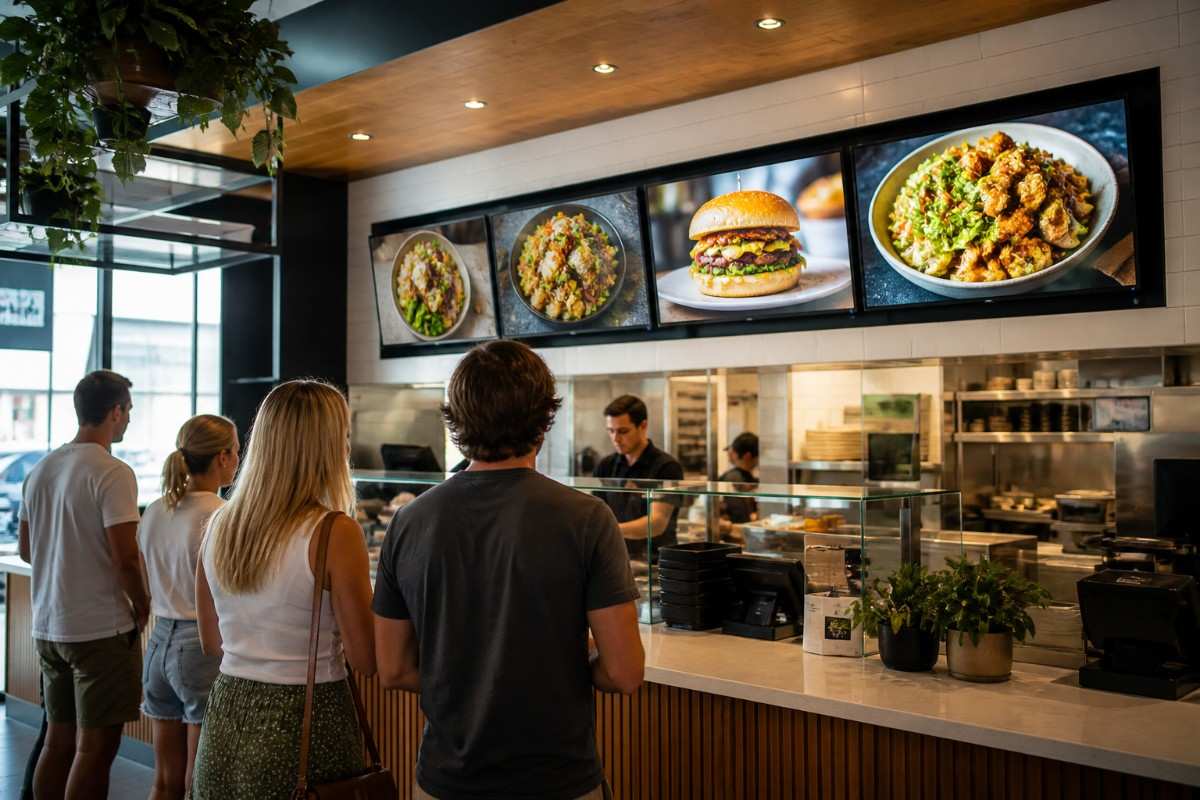
Most menus are just lists. Customers scan them, get overwhelmed, and take longer to decide. Digital menu boards change that completely. They guide choices, highlight what matters, and make ordering feel easier.
I’ve noticed something interesting when businesses switch to digital menus. People don’t just read them, they follow them. The visuals lead their eyes exactly where you want them to look.
What Are Digital Menu Boards?
Digital menu boards are screens used to display food and beverage menus dynamically. Instead of printed boards, you use digital displays to show items, prices, offers, and visuals.
You can update content instantly. Add promotions. Highlight bestsellers. Even adjust menus based on time of day.
In my experience, this flexibility alone makes a huge difference for restaurants that frequently change offerings.
Why Restaurants Are Switching to Digital Menu Boards
Traditional menus are static. They do not adapt. Digital menus do.
Key benefits you will notice:
- Faster updates without reprinting
- Better visual appeal with images and videos
- Improved upselling through smart placement
- Reduced ordering confusion
- Consistent branding across locations
A study by the National Restaurant Association found that digital menu boards can increase sales by up to 30 percent through better upselling and visual presentation.
How Digital Menu Boards Influence Customer Decisions
This is where digital menus become powerful.
People do not always know what they want. They decide based on what they see.
- Bright visuals make items look more appealing
- Motion draws attention to specific dishes
- Strategic placement increases high-margin sales
I’ve seen cafés boost sales of certain items simply by placing them in a rotating highlight section on the screen.
Best Places to Use Digital Menu Boards
Quick Service Restaurants
Speed matters. Digital boards help customers decide faster.
Cafes and Coffee Shops
Promote combos, seasonal drinks, and add-ons easily.
Food Courts
Stand out in crowded environments with bright, dynamic displays.
Restaurants with Changing Menus
Perfect for places that update items frequently.
Drive-Thru Outlets
Clear, bright menus improve ordering accuracy and speed.
When I tried analyzing a busy café setup, the digital menu reduced ordering time because customers could quickly scan visuals instead of reading long text lists.
Types of Digital Menu Boards
Standard Display Screens
Simple and effective for most restaurants.
Video Menu Boards
Include animations or short clips to make food look more appealing.
Interactive Menu Boards
Allow customers to explore items or customize orders.
Multi-Screen Menu Walls
Combine multiple displays for a larger, more impactful presentation.
I’ve noticed that even a single well-placed screen can outperform multiple poorly positioned ones.
What Makes a Digital Menu Board Effective
Technology alone is not enough. Content and design matter just as much.
Follow these principles:
- Keep it simple
Avoid overcrowding the screen - Use high-quality food images
People eat with their eyes first - Highlight bestsellers
Guide decisions instead of leaving them open - Use clear fonts and contrast
Readability is everything - Update regularly
Fresh content keeps attention
Think of your menu board as a visual guide, not just an information board.
Common Mistakes to Avoid
I’ve seen businesses make these mistakes repeatedly:
- Too much text on screen
- Low-quality or generic images
- Poor screen placement
- Ignoring customer flow
- Not using highlights or promotions
A confusing menu slows down orders. A clear one speeds everything up.
How Digital Harbor Helps Businesses Get It Right
Setting up digital menu boards is not just about installing screens. It is about creating a system that improves customer experience.
Digital Harbor focuses on aligning technology with how your customers actually behave. That makes a real difference.
In my experience, the best results come when menu design, screen placement, and content strategy work together. Digital Harbor helps businesses achieve that balance.
How to Choose the Right Digital Menu Board Setup
If you are planning to switch, here is a practical approach:
Step-by-step:
- Understand your menu complexity
- Choose the right screen size and number
- Plan content layout carefully
- Ensure easy content updates
- Test visibility from customer viewing angles
When I worked on a small café setup, adjusting the screen height alone improved readability and reduced customer confusion.
Future of Digital Menu Boards
Digital menus are evolving quickly.
- AI-based menu recommendations
- Real-time updates based on demand
- Integration with ordering systems
- Personalized menu experiences
I’ve noticed that customers now expect visual menus. Static boards feel outdated.
Final Thoughts
Digital menu boards are not just about replacing printed menus. They improve how customers interact with your brand.
If you want faster decisions, better upselling, and a more modern experience, digital menus are a smart move. With the right approach and support from Digital Harbor, your menu can become one of your most effective sales tools.