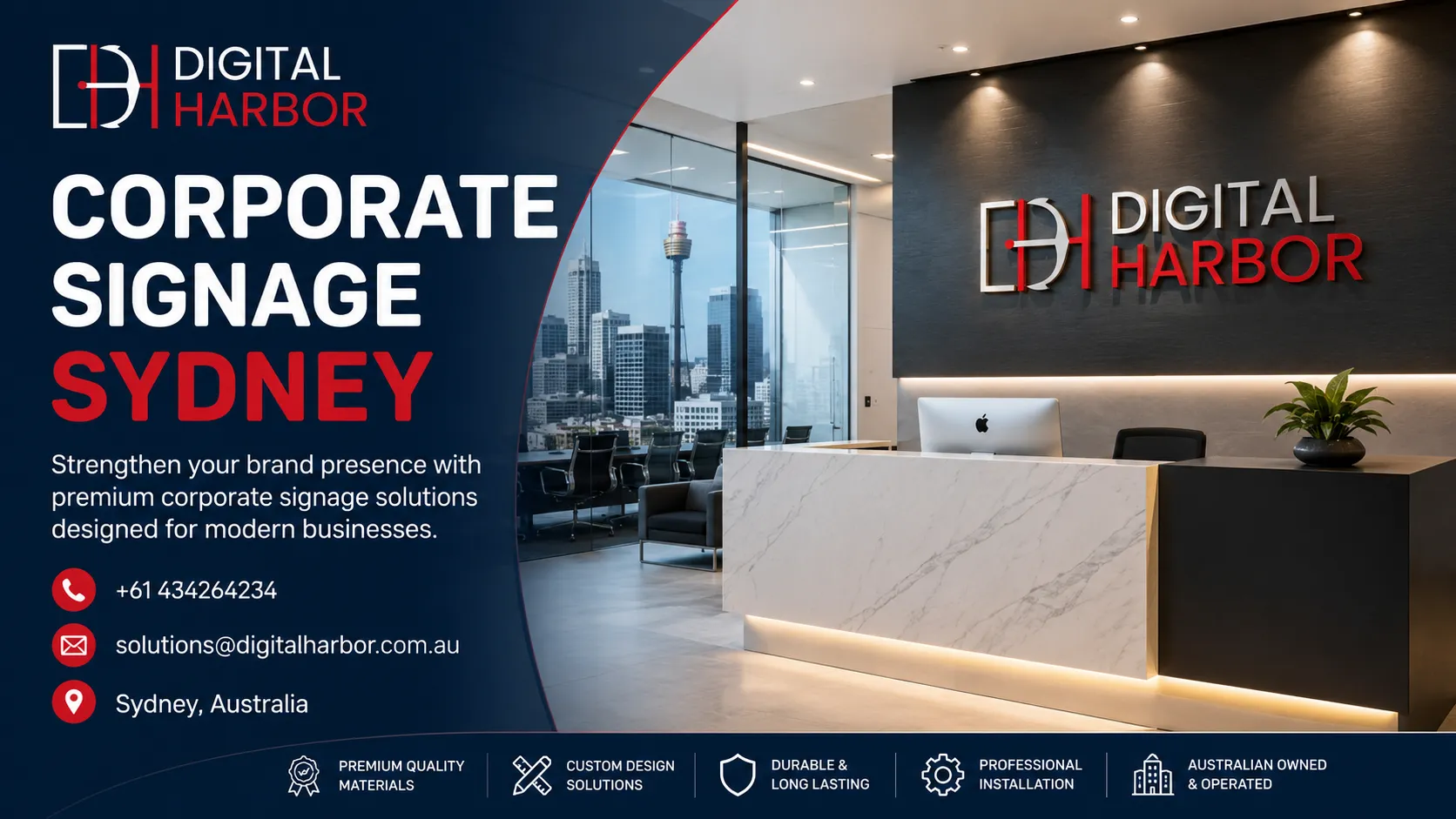
From corporate offices and retail stores to healthcare facilities and educational institutions, well-designed signage helps customers navigate spaces, reinforces your identity, and leaves a lasting impression. Businesses across Sydney, Melbourne, Brisbane, Perth, and Adelaide continue to recognise the value of professionally designed signage because it works around the clock without saying a word.
At Digital Harbor, we understand that every business has different goals, locations, and audiences. Choosing the right signage starts with understanding how customers interact with your space and how your brand should be presented.
Why Corporate Signage Matters More Than Ever
Corporate signage isn't simply a company logo mounted on a wall. It represents your business every day, inside and outside your premises.
When customers approach your office or retail location, your signage communicates several things immediately:
- Professionalism
- Brand credibility
- Attention to detail
- Business legitimacy
- Customer confidence
I've noticed that businesses investing in consistent branding across their signage often create a stronger first impression than competitors with outdated or inconsistent displays. Even small improvements to entrance signage can make a workplace feel more welcoming and organised.
Research published by the International Sign Association (ISA) has shown that effective signage influences customer awareness and can encourage more people to enter a business. Good signage doesn't replace good service, but it certainly helps people find and remember your business.
What Is Corporate Signage?
Corporate signage refers to professionally designed visual displays used by businesses to communicate information, promote branding, and improve navigation throughout commercial environments.
It can include both interior and exterior signs, such as:
- Reception signs
- Building identification signs
- Directory boards
- Wayfinding signage
- Office door signs
- Meeting room signage
- Window graphics
- Wall graphics
- Outdoor business signage
- Illuminated signs
- Safety and compliance signs
Unlike temporary promotional signs, corporate signage is usually designed as a long-term investment that becomes part of a company's identity.
Benefits of Professional Business Signage
Builds Brand Recognition
Your logo, colours, typography, and messaging should remain consistent across every customer touchpoint.
One thing I've learned while working with commercial branding projects is that consistency helps customers remember businesses far more easily. When reception signage, exterior signs, and interior graphics all share the same visual identity, the entire workplace feels more established.
This consistency becomes especially important for businesses operating across multiple Australian cities.
Creates Strong First Impressions
Imagine visiting two office buildings.
One has faded signage, inconsistent branding, and handwritten notices.
The other features elegant reception signage, clear directories, modern wall graphics, and well-lit external signs.
Which business would you trust more?
From what I've observed, customers often form opinions within moments of arriving. Corporate signage plays a major role in shaping those first impressions before conversations even begin.
Improves Customer Experience
Customers appreciate knowing exactly where to go.
Good signage reduces confusion by helping visitors locate:
- Reception
- Meeting rooms
- Customer service desks
- Parking areas
- Toilets
- Emergency exits
- Department locations
Effective wayfinding creates smoother experiences while reducing interruptions for staff.
Supports Workplace Productivity
Corporate signage isn't only for visitors.
Employees also benefit from:
- Department identification
- Safety reminders
- Meeting room labels
- Workflow signage
- Internal communication graphics
Clear signage reduces unnecessary questions and helps workplaces operate more efficiently.
Types of Corporate Signage
Every business has different requirements depending on its industry, building type, and customer interactions.
Reception Signs
Reception signage often becomes the centrepiece of an office.
Popular materials include:
- Acrylic
- Brushed aluminium
- Stainless steel
- Timber
- Frosted glass
- LED illuminated lettering
A professionally designed reception sign reinforces your brand from the moment visitors enter.
Exterior Building Signage
Exterior signage identifies your business from a distance and helps customers locate your premises.
Common options include:
- Fascia signs
- Building-mounted lettering
- Monument signs
- Pylon signs
- Illuminated logos
- Window graphics
Outdoor business signage must remain durable in Australia's changing weather conditions, making material selection just as important as design.
Wayfinding Signage
Larger commercial spaces benefit greatly from directional signage.
Examples include:
- Floor directories
- Lift directories
- Directional arrows
- Parking signs
- Department markers
- Accessible navigation signs
Well-planned wayfinding improves customer satisfaction while making buildings easier to navigate.
Wall Graphics
Wall graphics transform empty office spaces into engaging brand environments.
Many businesses use them to display:
- Company history
- Vision statements
- Core values
- Team achievements
- Inspirational graphics
- Custom illustrations
I've seen businesses completely refresh office interiors without major renovations simply by installing professionally designed wall graphics.
Window Graphics
Window graphics provide branding while also offering privacy.
They're commonly used for:
- Office meeting rooms
- Retail shopfronts
- Medical clinics
- Commercial offices
- Corporate headquarters
Options include frosted vinyl, full-colour graphics, and decorative films.
Digital Signage
Many modern workplaces now incorporate digital displays into their communication strategy.
These screens can display:
- Company announcements
- Welcome messages
- Visitor information
- Promotional campaigns
- Event schedules
- Live updates
Digital signage allows businesses to update information instantly without replacing physical signage.
Choosing the Right Corporate Signage
Selecting signage isn't simply about choosing attractive materials.
Consider these factors before making a decision.
Understand Your Business Goals
Ask yourself:
- Are you trying to increase visibility?
- Improve customer navigation?
- Strengthen brand identity?
- Modernise office interiors?
- Create a more professional reception?
Your objectives should guide every signage decision.
Think About Your Audience
Different industries require different approaches.
For example:
| Industry | Signage Priorities |
|---|---|
| Corporate Offices | Professional branding and wayfinding |
| Healthcare | Clear navigation and compliance |
| Retail | Visibility and promotional messaging |
| Education | Informational and directional signage |
| Hospitality | Guest experience and branding |
When I worked with businesses relocating to larger premises, customer navigation often became one of the biggest challenges. Well-planned signage solved problems that staff had been answering manually every day.
Select Durable Materials
Corporate signage is expected to perform for years.
Popular materials include:
- Acrylic
- Aluminium composite panels
- Stainless steel
- Glass
- PVC
- Vinyl
- Timber
- LED components
Each material offers different advantages depending on placement, maintenance requirements, and environmental conditions.
Maintain Brand Consistency
Your signage should reflect your existing brand guidelines.
Maintain consistency across:
- Logo usage
- Colour palette
- Typography
- Iconography
- Tone of messaging
- Graphic style
This creates a cohesive experience that customers recognise immediately.
Common Mistakes Businesses Make
Even attractive signage can lose its effectiveness if basic principles are overlooked.
Some of the most common mistakes include:
- Using fonts that are difficult to read
- Overcrowding signs with excessive information
- Poor placement that reduces visibility
- Ignoring accessibility requirements
- Inconsistent branding across locations
- Choosing materials unsuitable for outdoor conditions
- Neglecting maintenance after installation
I've seen businesses replace perfectly good signage simply because their branding evolved over time without updating their visual identity. Planning for future brand consistency can save considerable effort later.
Best Practices for Effective Corporate Signage
Creating signage that stands out requires more than attractive graphics. The most successful projects balance aesthetics, functionality, accessibility, and brand consistency.
Here are some best practices to keep in mind:
Keep Messaging Clear
People rarely stop to read lengthy signs. Use concise wording and prioritise the most important information. Your company name, logo, and directional information should be easy to understand at a glance.
Prioritise Readability
Good signage should be legible from the intended viewing distance.
Consider:
- Appropriate font sizes
- High colour contrast
- Simple typography
- Adequate spacing
- Logical information hierarchy
Consider Lighting
Lighting has a significant impact on visibility.
Depending on your location, illuminated signs, backlit lettering, or strategically placed lighting can improve visibility during early mornings, evenings, and poor weather conditions.
Design for Accessibility
Accessible signage benefits everyone.
Consider features such as:
- Easy-to-read fonts
- High contrast colours
- Braille where appropriate
- Logical placement
- Compliance with Australian accessibility guidelines
Plan for Future Growth
Businesses evolve over time.
Choose signage systems that allow updates as departments expand, branding changes, or office layouts are modified.
One thing I've learned from long-term branding projects is that flexible signage solutions often reduce future maintenance and replacement costs.
Corporate Signage vs Standard Business Signage
Although these terms are often used interchangeably, there are some important differences.
| Feature | Corporate Signage | Standard Business Signage |
|---|---|---|
| Primary Purpose | Brand identity and navigation | Advertising and visibility |
| Typical Locations | Offices, commercial buildings | Retail shops, storefronts |
| Design Focus | Consistent branding | Promotional messaging |
| Longevity | Long-term installation | Can be temporary or permanent |
| Examples | Reception signs, directories, wall graphics | Banners, promotional signs, shopfront displays |
Both play valuable roles, and many businesses benefit from combining corporate branding with promotional business signage to create a complete customer experience.
Corporate Signage Checklist
Before installing new signage, review this checklist:
- Define your branding objectives.
- Ensure logo files are high resolution.
- Choose materials suited to indoor or outdoor use.
- Maintain consistent colours and typography.
- Confirm visibility from key viewing distances.
- Consider customer navigation needs.
- Review accessibility requirements.
- Check local council requirements if applicable.
- Plan future updates or expansions.
- Schedule regular cleaning and maintenance.
Why Businesses Across Australia Invest in Professional Signage
Businesses in Sydney, Melbourne, Brisbane, Perth, and Adelaide operate in highly competitive environments. Standing out requires more than a quality product or service.
Professional signage helps businesses:
- Improve street presence.
- Strengthen brand recognition.
- Create memorable customer experiences.
- Support employee navigation.
- Reinforce professionalism.
- Present a consistent brand across multiple locations.
I've noticed that organisations expanding into new cities often achieve a more unified brand image when signage standards are applied consistently across every office and branch.
For companies searching online for business signage near me or comparing Sydney signage companies, choosing an experienced signage partner means considering design capability, installation expertise, and long-term support rather than simply focusing on the sign itself.
Digital Harbor works closely with businesses to develop signage solutions that reflect their brand identity while supporting practical day-to-day operations across commercial environments.
Key Takeaways
- Corporate signage strengthens brand identity and builds trust.
- Clear signage improves customer navigation and workplace efficiency.
- Consistent branding creates a more professional business image.
- Material selection should suit the installation environment.
- Accessibility and readability should never be overlooked.
- Reception, exterior, wayfinding, wall graphics, and digital displays each serve different purposes.
- Planning for future business growth makes signage easier to update over time.
Final Thoughts
Choosing the right corporate signage Sydney businesses rely on is about creating an environment that reflects your brand while making your workplace easier to navigate for customers, visitors, and employees.
Thoughtful signage combines design, functionality, and consistency to support long-term business goals. From reception areas and office interiors to outdoor business signage and wayfinding systems, every sign contributes to the experience people have with your organisation.
At Digital Harbor, we believe effective signage starts with understanding your business, your audience, and the impression you want to create. By combining strategic design with practical solutions, businesses across Sydney and other major Australian cities can build stronger brand recognition and create spaces that leave a lasting positive impression.