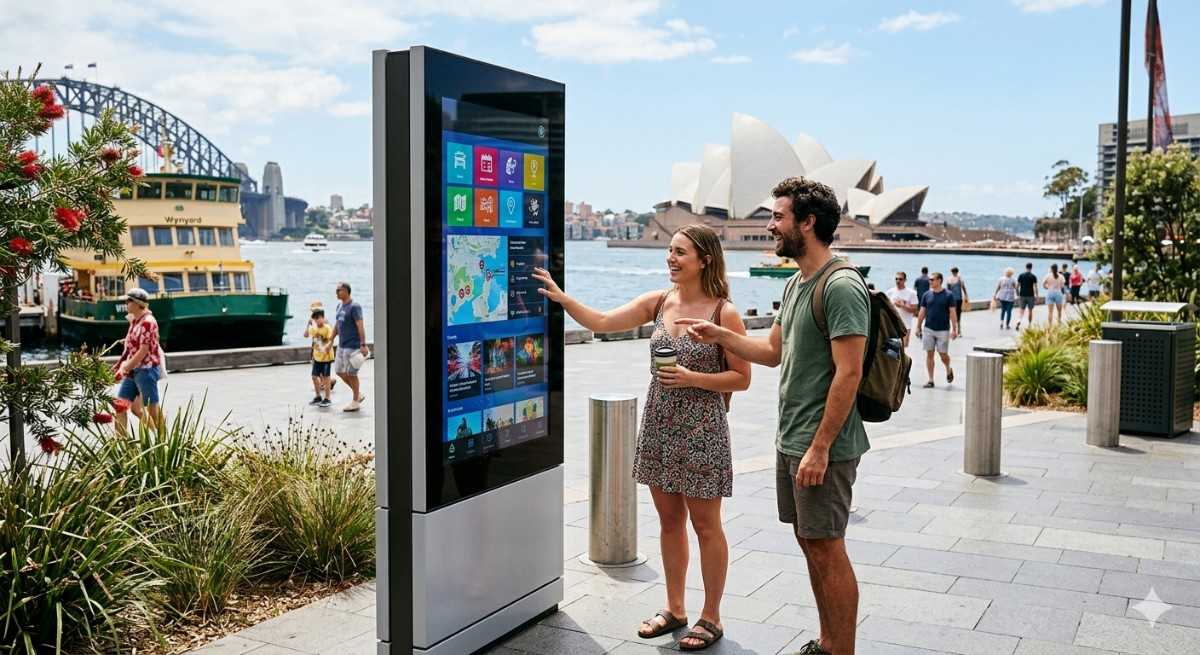
Most screens talk at people. Interactive digital signage does something different. It invites people in. Tap, explore, discover. That small shift changes everything.
If your current displays are just showing content, you’re missing a huge opportunity. I’ve noticed that when people can interact with a screen, they spend more time with it. And time is what leads to decisions.
What Is Interactive Digital Signage?
Interactive digital signage refers to display systems that allow users to engage directly through touch, gestures, or input. Instead of passively watching, your audience becomes part of the experience.
Think of it like the difference between watching a video and using an app. One is passive. The other is engaging.
In my experience, even simple touch-based navigation can dramatically increase how long someone stays engaged with your content.
Why Interactive Digital Signage Works Better
People like control. When they can choose what to see, they pay more attention.
Here’s what makes it powerful:
- Active engagement instead of passive viewing
- Personalized user experience
- Longer interaction time
- Better information retention
- Higher conversion potential
A report by Deloitte highlighted that interactive experiences can increase customer engagement rates significantly compared to static displays.
Where Interactive Digital Signage Makes the Biggest Impact
Retail Stores
Customers can browse products, check availability, or explore features without needing assistance.
Shopping Malls
Wayfinding kiosks help visitors navigate easily.
Hotels and Hospitality
Guests can access services, bookings, and local information.
Healthcare Facilities
Patients can check in, find departments, or access information.
Corporate Offices
Interactive directories and meeting room displays improve efficiency.
When I tried observing customer behavior in a retail setup, people naturally gravitated toward interactive screens over static ones. Curiosity drives action.
Types of Interactive Digital Signage
Touchscreen Displays
The most common type. Users tap, swipe, and explore content.
Interactive Kiosks
Standalone units used for navigation, ordering, or information.
Gesture-Based Displays
Allow interaction without touch, useful in hygiene-sensitive environments.
QR-Integrated Displays
Users scan codes to interact through their own devices.
Interactive Video Walls
Large displays that respond to user input for immersive experiences.
I’ve noticed that even basic touchscreen functionality can outperform advanced setups if used correctly.
How Interactive Signage Influences Customer Behavior
This is where things get interesting.
People remember what they interact with.
- Interaction increases emotional connection
- Exploration leads to deeper understanding
- Control creates a sense of ownership
In my experience, customers are far more likely to convert after engaging with interactive content compared to just viewing it.
Intel has reported that interactive digital signage can significantly increase dwell time, which directly impacts purchase decisions.
Designing Effective Interactive Experiences
Technology is only half the equation. Design matters just as much.
Follow these principles:
- Keep navigation simple and intuitive
- Use clear visual cues for interaction
- Limit steps to avoid confusion
- Focus on user goals, not just features
- Test real user behavior before finalizing
Think of it like designing an app. If it is not easy to use, people will walk away.
Common Mistakes to Avoid
I’ve seen businesses invest heavily in interactive systems but miss the basics.
- Overcomplicated interfaces
- Slow or unresponsive screens
- Lack of clear instructions
- Poor placement in low-traffic areas
- Ignoring user behavior
A confusing experience drives people away faster than no experience at all.
How Digital Harbor Helps You Get Interactive Right
Implementing interactive digital signage is not just about adding touchscreens. It is about creating meaningful interactions.
Digital Harbor focuses on understanding how users behave and what they need. That makes a real difference in how effective the solution is.
In my experience, the best interactive systems feel effortless. Digital Harbor works toward creating that seamless experience.
How to Choose the Right Interactive Signage Solution
If you are planning to adopt interactive displays, here is a simple approach:
Step-by-step:
- Define the purpose clearly
- Understand your audience behavior
- Choose the right hardware and software
- Design user-friendly interfaces
- Test and optimize continuously
When I worked on a small project involving interactive kiosks, simplifying the interface improved engagement more than adding new features.
Future of Interactive Digital Signage
Interactive displays are evolving quickly.
- AI-driven personalization
- Voice interaction
- Augmented reality integration
- Mobile connectivity
I’ve noticed that users now expect experiences, not just information. Interactive signage delivers that.
Final Thoughts
Interactive digital signage turns passive viewers into active participants. That shift can transform how people experience your brand.
If you want deeper engagement, better communication, and stronger connections, interactive displays are a smart move. With the right approach and support from Digital Harbor, you can create experiences people actually remember.