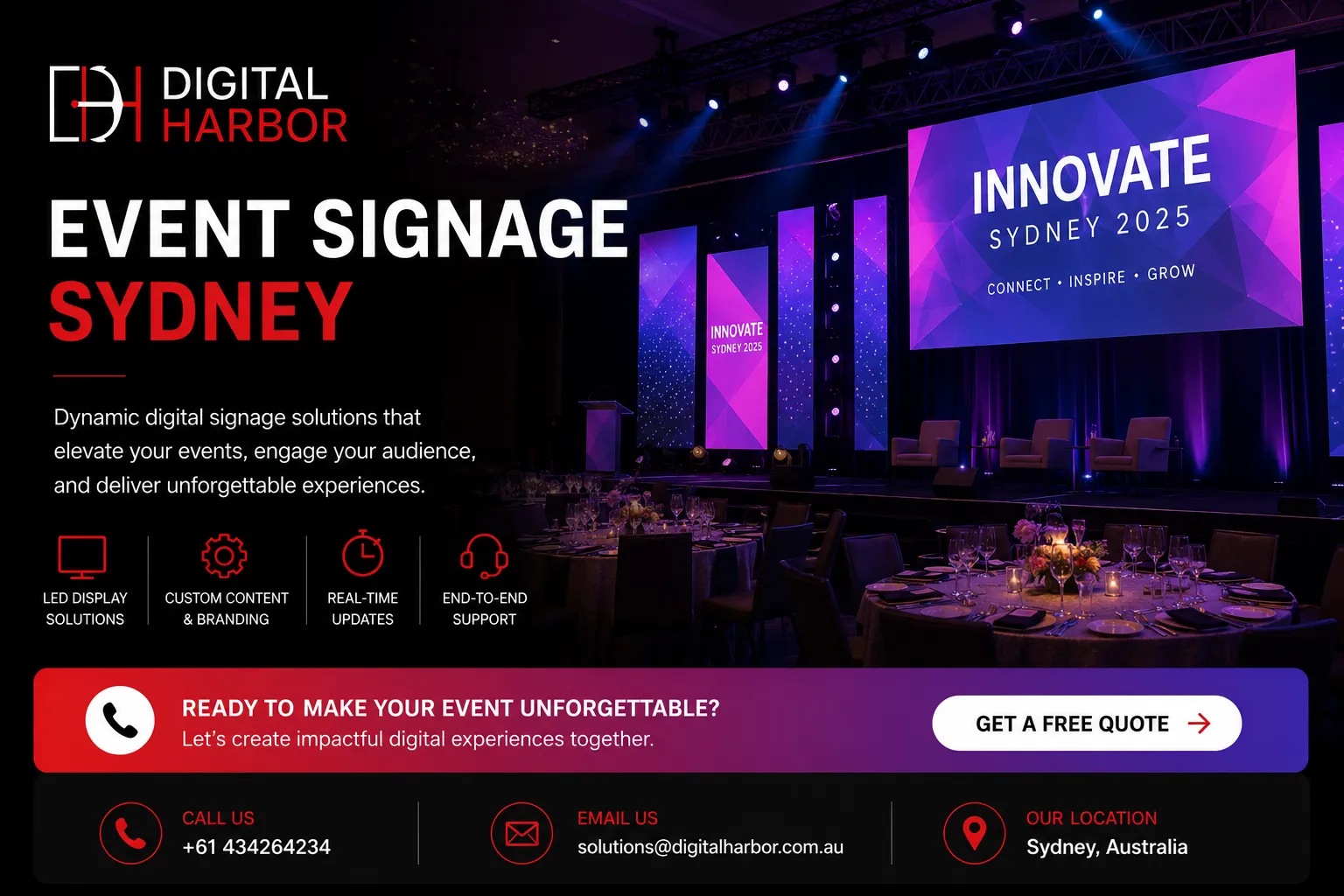
The events industry in Australia continues to grow. According to the Australian Bureau of Statistics, the events and exhibitions sector contributed over $8 billion to the Australian economy in recent years. Event signage plays a crucial role in this ecosystem, from weddings to corporate conferences, music festivals to trade shows.
The events industry in Australia continues to grow. According to the Australian Bureau of Statistics, the events and exhibitions sector contributed over $8 billion to the Australian economy in recent years. Event signage plays a crucial role in this ecosystem, from weddings to corporate conferences, music festivals to trade shows.
What Is Event Signage and Why Does It Matter?
Event signage refers to any visual display used to guide, inform, or engage attendees at an event. It can be temporary or permanent, digital or static. Common examples include registration signs, wayfinding displays, sponsor boards, schedule screens, and directional signs.
Why does event signage matter so much? Simple: it shapes the attendee experience. People judge an event within the first few minutes. Good signage communicates professionalism and attention to detail. Poor signage leaves people confused and frustrated.
In my experience working with event organizers across Sydney, those who prioritize signage see better feedback and higher attendance at follow-up events. It's not just about signs - it's about creating a seamless experience.
Types of Event Signage
Different events need different solutions. Here's what works where.
Wedding Signage Sydney
Weddings have become more elaborate, and signage is a big part of that. Welcome signs, seating charts, directional boards, and photo booth backdrops all fall into this category. The trend toward personalized wedding signage shows no signs of slowing.
Corporate Event Signage
Conference stages, registration desks, sponsor displays, and breakout room directions. Digital signs are increasingly popular here because content can be updated throughout the event. Speaker changes? Room swaps? Schedule updates? Update a digital sign in minutes.
Music Festival Signage
Large-scale outdoor events need robust, weatherproof signs. Stage schedules, food court locations, water station directions, and emergency exits all need clear, visible signage.
Trade Show Signage
Exhibition booths rely heavily on visual impact. Pull-up banners, digital screens, and hanging signs all compete for attendee attention. The most effective booths use a combination of static and digital signage.
Sporting Event Signage
Stadiums and arenas use digital signage boards for scores, replays, and sponsor messages. Wayfinding signs guide crowds through concourses and seating sections.
Digital Event Signage vs. Static Signs
The choice between digital and static event signage depends on your needs. Here's how they compare.
| Feature | Digital Signs | Static Signs |
|---|---|---|
| Content updates | Real-time | Physical replacement |
| Schedule flexibility | Yes, change instantly | No, fixed |
| Information volume | Multiple screens, rotating content | One message per sign |
| Visual impact | High (motion and brightness) | Moderate |
| Cost | Higher initial investment | Lower initial cost |
| Reusability | Yes, for any event | Limited to specific messaging |
When I worked with a major conference in Sydney, they switched to digital signage for their schedule boards. Last-minute speaker changes became simple to manage. The conference ran smoother, and attendees appreciated having accurate information.
LED Signage Boards for Events
LED signage boards are increasingly common at events. Here's why.
Brightness. LED boards work in any lighting condition. They're visible in direct sunlight, making them ideal for outdoor events. Indoor events benefit from their crisp, clear display quality.
Dynamic content. Show videos, animations, rotating messages, or live social media feeds. LED signage boards capture attention in ways static signs cannot.
Remote management. Update content from anywhere using mobile app control. This is invaluable for multi-day events or large venues where physically updating signs would be impractical.
Sponsor value. LED digital signage boards display multiple sponsor messages on rotation. This increases sponsorship value and makes your event more attractive to potential partners.
Wedding Signage Sydney: Trends and Tips
Wedding signage has become a major trend. Here's what's popular and what works.
Welcome signs. These set the tone for the entire event. Acrylic signs with calligraphy remain popular. LED-lit signs create a modern feel.
Seating charts. Displaying guest seating arrangements saves confusion. Digital options allow last-minute changes if guests cancel or RSVP numbers change.
Directional signs. Guide guests from ceremony to reception, from dining to dancing. Simple, clear directions improve guest experience.
Photo booth signs. Encourage guest participation with clear instructions and fun prompts.
Schedule boards. Display the timeline for the day. This keeps guests informed and reduces questions for the wedding party.
One thing I've noticed with wedding signage Sydney couples use effectively - it reflects their personal style. The best wedding signage doesn't look generic. It fits the venue, the theme, and the couple's personality. Work with your signage provider to create something unique.
Step-by-Step Guide to Event Signage Planning
Define objectives. What do you need signage to achieve? Guide people? Promote sponsors? Display schedules? Different objectives require different solutions.
Understand your venue. Indoor or outdoor? Lighting conditions? Power availability? Structural mounting points? These factors determine what type of signage you can use.
Know your audience. Corporate attendees expect professional, clean design. Festival attendees respond to colorful, playful visuals. Weddings need elegance. Match your signage to your audience.
Create a signage map. Walk through the event from an attendee perspective. Where do people need direction? Where will they be waiting or looking? Place signs accordingly.
Select hardware. Choose between static or digital, indoor or outdoor rated. LED signage boards work for most events but cost more upfront.
Design content. Keep messages clear and brief. Use large fonts that are readable from a distance. High contrast between text and background.
Plan updates. If using digital signage, schedule content rotations. For multi-day events, plan daily updates.
Test everything. Set up signs before the event. Check visibility from different angles. Test digital signs to ensure content displays correctly.
Have a backup plan. Digital signs can fail. Have spare signage or know how to make quick repairs. For critical information, always have a static backup option.
Common Event Signage Mistakes
Too much text. Passersby don't stop to read paragraphs. Your sign has seconds to communicate. Keep messages brief.
Insufficient brightness. Indoor signs used outdoors become unreadable. Check your venue lighting and choose appropriate screens.
Poor placement. A beautiful sign is useless if nobody sees it. Place signs where people naturally look - at entrances, intersections, and decision points.
Ignoring directional flow. Signs should guide people logically through your event. Start with large signs for overall direction, then smaller signs for specific locations.
Forgetting about accessibility. Consider vision-impaired attendees. Use high contrast, large fonts, and consider audio options for critical information.
No content management plan. For digital signage, plan who updates content and when. During one large event I worked on, multiple people updated the same signs with conflicting information. We created a single point of contact for content updates, and problems stopped.
Technology Options for Event Digital Signage
Cloud-based Content Management
Most modern event signage uses cloud-based management. Update content from any device with internet access. Schedule content changes in advance.
Mobile App Control
Some systems offer dedicated mobile apps. Adjust content on the fly from your phone. Perfect for events where last-minute changes are common.
GPS and Location Features
For large events, some digital signs include GPS tracking. This helps you know where each sign is located and ensures content matches the location.
Interactive Features
Touchscreens allow attendees to find what they need. Interactive maps, schedule searches, and speaker information all improve attendee experience.
Event Signage Regulations
Different venues and councils have different requirements. Always check:
Council permits. Some councils require permits for temporary signage, especially for outdoor events. Check with the local council before installing event signage Sydney-based.
Fire safety regulations. Signs must not block fire exits or emergency equipment. Fire extinguishers, exits, and hose reels must remain visible and accessible.
Electrical safety. Digital signs require proper power supply and cabling. Use qualified electricians for installations.
Stability requirements. Outdoor signs must withstand wind and weather. Falling signs are a safety hazard and a liability issue.
Light pollution limits. Some areas restrict light levels from outdoor digital signs. Check local regulations.
Future Trends in Event Signage
Programmable Content
Event signage is becoming more intelligent. Signs can display different content based on time of day, crowd density, or even weather conditions.
Integration with Event Apps
Digital signs now integrate with event apps. Attendees can scan QR codes on signs to save information to their phones or receive notifications.
Sustainable Signage
More events are choosing sustainable options. LED signage uses less energy than fluorescent alternatives. Some providers offer rental options, reducing waste from disposable signs.
AI-Driven Personalization
Some high-end events now use AI to display different content to different attendees. This remains expensive but is becoming more accessible.
From what I've observed, events that adopt these trends early stand out. Attendees notice when an event feels polished and professional. Good signage contributes significantly to that perception.
Key Takeaways
-
Event signage shapes attendee experience and event success.
-
Digital signs offer real-time updates and flexibility.
-
LED signage boards work well for most events.
-
Wedding signage Sydney couples choose should reflect personal style.
-
Plan signage placement based on attendee movement.
-
Always check venue requirements and council regulations.
-
Have backup options for critical digital signage.
Final Thoughts
Event signage might seem like a small detail, but it has an outsized impact on how people experience your event. I've seen carefully planned events receive poor feedback solely because attendees couldn't find their way around. I've watched simple, effective signage turn chaotic venues into smooth-running environments.
If you're planning an event, allocate proper budget and time to signage. Consider digital options for flexibility. Work with experienced providers who understand the technical and regulatory requirements. The difference between an average event and an excellent one often comes down to these details.
Digital Harbor offers event signage solutions across Sydney, Melbourne, Brisbane, Perth, and Adelaide. From LED signage boards to wedding signage and digital displays, they can help you create signage that guides, informs, and impresses your attendees.