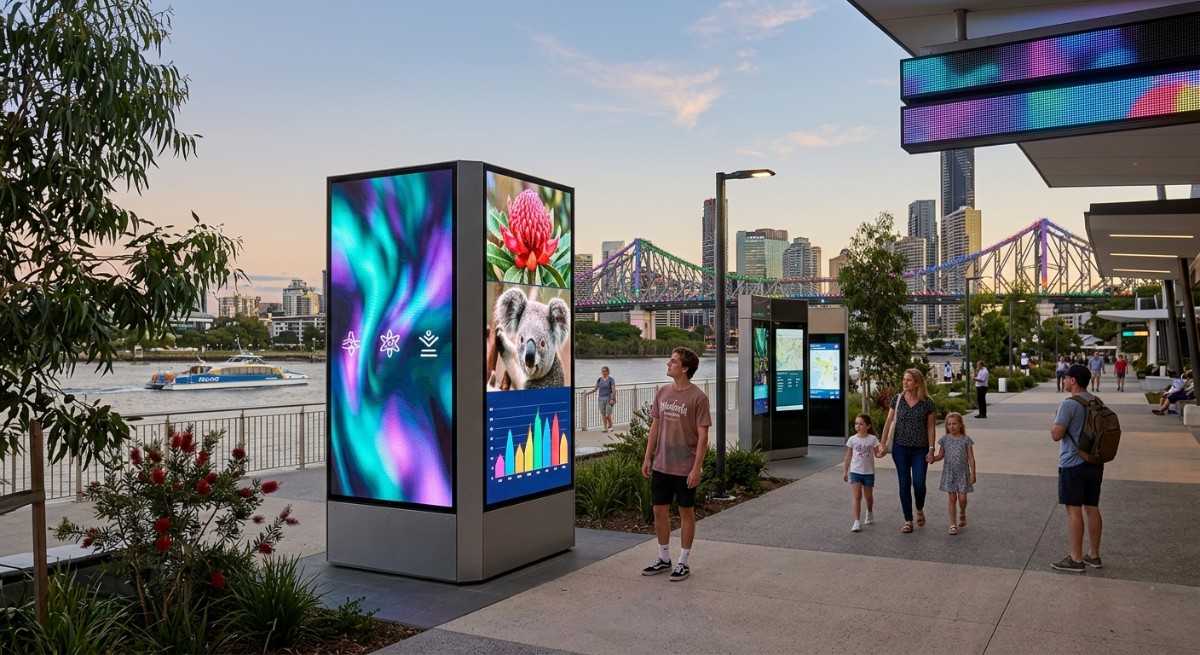
Electronic signs across Australia are being adopted at a pace that would have seemed remarkable a decade ago. From a bakery in suburban Adelaide to a corporate tower in Sydney's CBD, businesses of every size and type are discovering that dynamic, remotely managed signage is not just more effective than static alternatives. It is fundamentally a smarter way to communicate with customers.
This guide covers everything you need to know, honestly and practically.
The Real State of Electronic Signs in Australia
Australia has one of the most active digital signage markets in the Asia-Pacific region. A 2023 industry report by Grand View Research valued the global digital signage market at over USD 25 billion, with the Australian segment growing steadily driven by retail, hospitality, and corporate adoption.
That growth is not happening by accident. It reflects a genuine shift in how Australian businesses think about customer communication.
I've noticed that the businesses leading this shift are not always the biggest ones. A single well-placed electronic sign in the right location, running the right content, can outperform entire print campaigns on both cost and impact. The playing field has levelled considerably.
The challenge is that the market has also expanded to include a wide range of products at very different quality levels, and not all of them are suited to the conditions Australian businesses actually operate in.
Why Electronic Signs Outperform Traditional Signage in the Australian Market
The Australian environment presents specific challenges that make the quality and specification of your signage matter more than in many other markets.
Intense UV exposure, wide temperature ranges, coastal humidity in cities like Sydney, Brisbane, and Perth, and the sheer variety of commercial environments from air-conditioned CBD offices to open-air suburban retail strips. Static printed signs degrade quickly in these conditions. Well-specified electronic signs are engineered to handle them.
Beyond durability, the content advantage is substantial. A printed sign says one thing. An electronic sign can say dozens of things across a single day, adjusted in real time from a phone or desktop, without any physical intervention at the display itself.
Think of it like the difference between a photograph and a television broadcast. Both show you something. Only one of them can change.
Types of Electronic Signs Used by Australian Businesses
The category of electronic signs covers a broad range of products. Understanding which type fits your specific situation is the most important decision you will make.
LED Window Display Signs
Designed to sit behind shopfront glass and remain visible from outside, even in bright Australian sunlight. These are particularly effective on busy pedestrian strips in Melbourne, Sydney, and Brisbane where competing for the attention of passing foot traffic is the core challenge.
Content on window displays needs to work hard and fast. Bold visuals, short messages, and regular rotation. You have seconds to earn a second glance from someone who has already seen twenty other shop windows on the same block.
Digital Menu Board Signs
The hospitality sector across Australia has embraced electronic menu boards faster than almost any other category. The operational logic is hard to argue with. Update your menu in seconds. Schedule different offerings for different meal periods automatically. Use photography that actually makes food look the way it tastes.
When I tried running a static printed menu alongside a digital board for a comparative period, the digital board outperformed on upsell rate by a meaningful margin. The visual difference alone changed how customers made decisions.
Video Wall Electronic Displays
Multiple commercial panels tiled into a single large-format display. You will find these in shopping centre anchor stores, hotel lobbies, fitness centres, and corporate reception areas across Australia. The visual impact is immediate and memorable.
Video walls do something that individual screens cannot. They create an immersive environment. A well-configured video wall in a retail flagship does not just show content. It defines the atmosphere of the entire space.
Interactive Electronic Signs
Touchscreen displays that invite customer participation. Product finders, self-service kiosks, wayfinding systems, and information terminals. Australian retail and healthcare sectors are deploying these at increasing rates to manage customer flow, reduce staff burden, and deliver a more personalised experience.
Outdoor Electronic Signs
Freestanding or wall-mounted displays built for exterior Australian conditions. Weatherproofing, UV resistance, and high-brightness panels are not optional features here. They are the baseline specification for anything placed outdoors in any Australian capital city.
Portable outdoor units are particularly useful for businesses that need flexible positioning. Drive-through operators, outdoor dining venues, markets, and event-based businesses all benefit from displays that can be repositioned without major installation work.
Custom LED Electronic Displays
Purpose-built displays in non-standard dimensions for unique architectural spaces. Curved installations, unusually wide or tall configurations, irregularly shaped feature walls. Australian commercial architects and interior designers are increasingly incorporating custom electronic signage as a structural design element rather than an afterthought.
What to Look for When Choosing an Electronic Signs Provider in Australia
This is where the decision gets serious. The screen is the visible part. The provider relationship, the software platform, and the support structure are what determine whether your investment performs over time.
Here is a practical framework for evaluation:
- Complete service capability. Can they handle consultation, site assessment, hardware supply, installation, content setup, and ongoing technical support? A provider who only sells hardware leaves you managing the rest alone.
- Australian installation experience. The conditions here are specific. Heat, UV, coastal humidity, and the regulatory requirements around outdoor signage vary by state. Your provider should have demonstrated experience working in Australian commercial environments.
- Content management system quality. You will be using this platform regularly. It needs to be intuitive, reliable, and capable of managing multiple screens across multiple locations if your business grows. Ask for a live demonstration.
- Real project portfolio. Request actual installation photos from completed Australian projects. Real-world examples across different industries and environments tell you far more than a product brochure.
- Post-installation support. Electronic signs are commercial assets. They need to work every trading day. Understand clearly what happens when something goes wrong and how quickly a resolution is delivered.
Digital Harbor has built its service model around exactly these requirements. Every project begins with a proper site and business assessment, and the support relationship continues well beyond the installation date.
Industries Across Australia Getting the Most From Electronic Signs
Retail
Window displays and in-store screens driving promotional awareness, seasonal campaigns, and loyalty program messaging. Australian retail is competitive and visual, and the brands performing best are treating their electronic signage as a live marketing channel.
Food and Beverage
Cafes, restaurants, quick-service venues, food courts, and bars. Digital menu boards and promotional displays have become standard fit-out items in any serious Australian hospitality venue. The combination of visual appeal and operational flexibility is simply too valuable to ignore.
Healthcare
GP clinics, specialist practices, pharmacies, and allied health centres are using electronic signs to inform patients, reduce perceived wait times, and promote available services. In my experience, patients in these environments engage genuinely with well-produced health content displayed while they wait. It converts passive waiting into active communication.
Corporate and Professional Services
Reception areas, boardrooms, building directories, and internal communications screens. Australian corporate environments are using electronic signage to manage brand impression, communicate culture, and deliver real-time information to staff and visitors.
Education
Schools, TAFE campuses, and universities across Australia are deploying electronic signs for campus wayfinding, event announcements, timetable displays, and community communication. The ability to update content centrally across multiple screens simultaneously makes management practical at scale.
Fitness and Wellness
Gyms and studios using screens for class schedules, motivational content, and promotional campaigns. I've noticed that fitness businesses which use their electronic signs for member-relevant content, rather than purely promotional material, build stronger community engagement around their displays.
Getting the Setup Right: Practical Advice for Australian Businesses
A few things that make a genuine difference when deploying electronic signs in Australia.
Specify for your actual environment. The single biggest mistake is buying an indoor-rated screen for a position that receives any direct or reflected sunlight. In Australian conditions this is not a gradual problem. It is a rapid one.
Plan your content before installation day. Electronic signs without a content strategy are expensive screensavers. Know what you are going to show, how often you will update it, and who is responsible for managing it.
Use scheduling from the start. Most commercial electronic sign platforms allow you to schedule different content for different times of day automatically. This is one of the most powerful features available and one of the most underused by businesses that are new to the technology.
Think about the viewing distance and angle. A screen that looks perfect head-on at two metres may be difficult to read from a vehicle at twenty metres. Pixel pitch, panel size, and mounting height all factor into how your display performs at its actual viewing distance.
Digital Harbor's team assesses all of these variables during the consultation phase, which is one of the reasons their installations perform consistently well across very different Australian commercial environments.