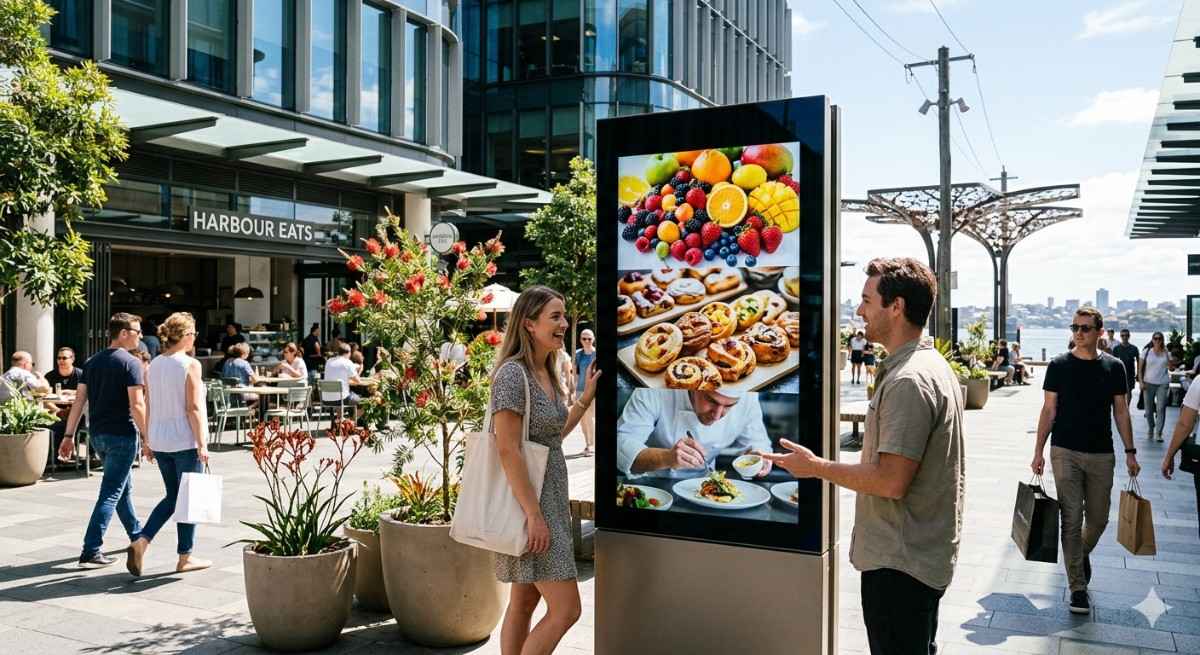
Walk into any busy store, office, or showroom and notice what grabs your attention first. It is rarely a printed poster. It is the bright, dynamic commercial displays that stand out instantly.
If your business is still relying heavily on static visuals, you are competing at a disadvantage. I’ve noticed that customers naturally gravitate toward screens that move, change, and feel alive.
What Are Commercial Displays?
Commercial displays are professional-grade screens designed for business use. Unlike regular TVs, they are built for longer usage, better brightness, and consistent performance in commercial environments.
They are used for:
- Advertising
- Information sharing
- Branding
- Customer engagement
In my experience, the biggest difference between a consumer TV and a commercial display is reliability. Commercial screens are built to run for hours without losing quality.
Why Businesses Are Investing in Commercial Displays
There is a clear reason behind the shift.
Key benefits you will notice:
- Higher visibility in busy environments
- Dynamic content that attracts attention
- Long operational life compared to regular screens
- Flexible content management
- Stronger brand presence
I’ve seen businesses upgrade to commercial displays and immediately notice better engagement. It is not just about technology. It is about how people respond to it.
Types of Commercial Displays You Should Know
Choosing the right display depends on where and how you plan to use it.
Indoor Commercial Displays
Ideal for offices, retail stores, and malls. Focus on clarity and design.
Outdoor Commercial Displays
Designed to handle sunlight, weather, and long viewing distances.
LED Displays
Known for brightness and visibility. Great for large-scale advertising.
Video Walls
Multiple screens combined to create a large, immersive display.
Interactive Displays
Allow users to engage directly with the content.
When I tried comparing LED displays with standard screens for a project, the brightness difference was immediately noticeable. That matters a lot in high-traffic areas.
Where Commercial Displays Deliver the Most Value
Retail Stores
Highlight promotions and guide buying decisions.
Corporate Offices
Display announcements, branding, and internal communication.
Restaurants and Cafes
Show menus and promotions clearly.
Healthcare Facilities
Provide information and improve patient experience.
Events and Exhibitions
Capture attention in crowded spaces.
I’ve noticed that placement plays a huge role. Even the best display will underperform if it is not positioned correctly.
How Commercial Displays Influence Customer Behavior
This is where things get interesting.
People are naturally drawn to movement and light.
- Motion captures attention faster
- Visual storytelling keeps people engaged
- Repetition improves memory
In my experience, customers are far more likely to remember what they saw on a screen than what they read on a printed board.
A report by Intel suggests that digital displays attract significantly more views compared to static signage. That directly impacts awareness and engagement.
Content Strategy for Commercial Displays
The screen is only part of the equation. Content is what makes it work.
What you should focus on:
- Clear and concise messaging
- High-quality visuals
- Consistent branding
- Strong call to action
- Regular updates
Think of your display as a silent salesperson. It should communicate quickly and effectively.
Common Mistakes to Avoid
I’ve seen businesses make these mistakes repeatedly:
- Overloading screens with text
- Using low-quality visuals
- Ignoring placement and viewing angles
- Not updating content regularly
- Choosing the wrong screen type
A cluttered display confuses viewers. A focused display converts better.
How Digital Harbor Helps You Get It Right
Implementing commercial displays is not just about installing screens. It is about creating a system that delivers results.
Digital Harbor focuses on understanding your business needs and aligning display solutions accordingly. That approach makes a real difference.
In my experience, the best results come when technology, placement, and content strategy work together. Digital Harbor ensures that balance.
How to Choose the Right Commercial Display
If you are planning to invest, here is a practical approach:
Step-by-step:
- Define your goal clearly
- Choose the right location
- Select the appropriate display type
- Plan your content strategy
- Ensure easy content management
When I worked on a display setup for a showroom, adjusting the screen height improved visibility more than any design change.
Future Trends in Commercial Displays
Commercial display technology is evolving quickly.
- AI-driven content personalization
- Real-time updates
- Interactive features
- Integration with mobile devices
I’ve noticed that customers now expect dynamic experiences. Static visuals feel outdated.
Final Thoughts
Commercial displays are more than just screens. They are tools that shape how people experience your brand.
If you want better visibility, stronger engagement, and a modern presence, investing in the right display system makes sense. With the right strategy and support from Digital Harbor, your displays can become powerful business assets.