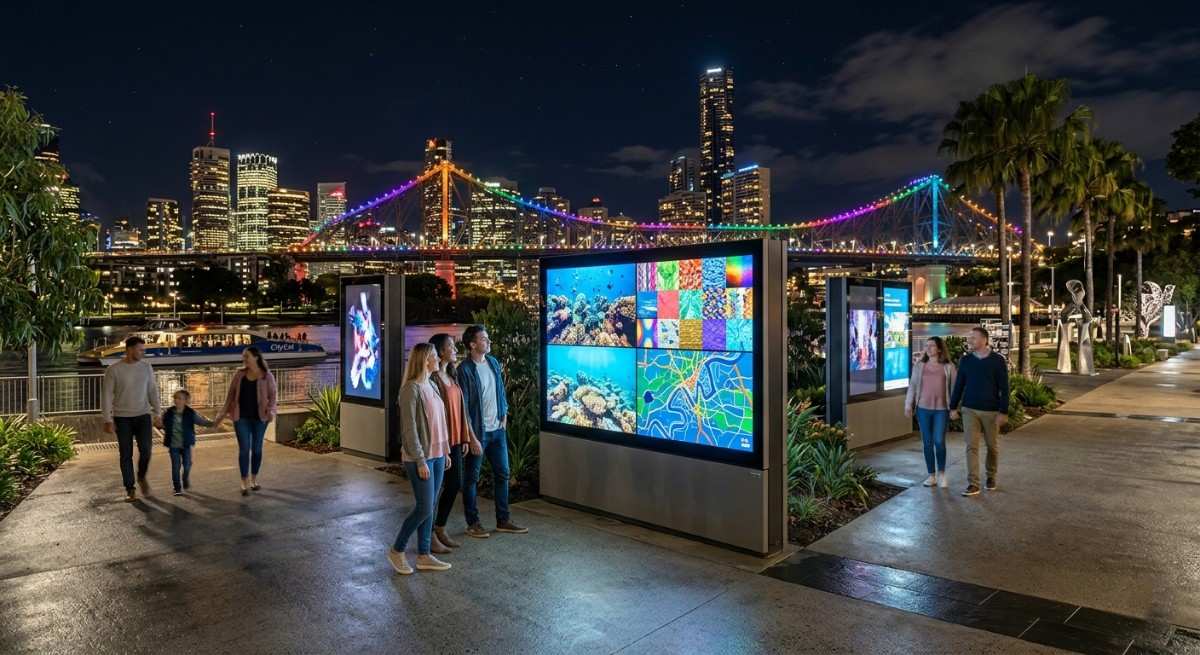
Brisbane is a city that moves fast. Foot traffic on Queen Street, the busy cafe strips in Fortitude Valley, the retail precincts in Chermside and Carindale. Attention is currency here. And digital signage is one of the most powerful ways to spend it.
This guide breaks down everything you need to know about digital displays in Brisbane, whether you're a small business owner just exploring your options or a multi-site operation looking to scale your signage strategy.
Why Brisbane Businesses Are Switching to Digital Displays
The shift isn't happening by accident. Businesses across Queensland are making the move because the results are hard to ignore.
According to a Nielsen study on out-of-home advertising, digital displays generate significantly higher recall rates compared to static signage, with some formats outperforming print by over 400%. That's not a small gap. That's a different conversation entirely.
I've noticed that the businesses which hesitate longest are usually the ones who think digital signage is only for big corporations or franchise chains. That couldn't be further from reality. A single digital menu board in a Brisbane cafe can do more for your average order value than months of social media posting.
The core reasons businesses are switching:
- Content can be updated instantly, no printing costs, no waiting
- Bright, high-resolution screens cut through visual noise in any environment
- You can run different content at different times of day
- Digital displays attract and hold attention longer than any static alternative
- The long-term cost per impression is dramatically lower than print
Types of Digital Displays Available in Brisbane
Not all digital signage is built the same. The right type depends entirely on where you're placing it, what you're trying to communicate, and who you're talking to.
Digital Window Displays
These are exactly what they sound like. Ultra-bright screens mounted behind or within shopfront glass, visible from the street even in direct sunlight. If you're on a busy Brisbane strip, a window display is one of the fastest ways to pull people off the footpath and into your store.
In my experience, window displays work best when they're showing something dynamic. A looping video of your product, a time-sensitive offer, or even branded lifestyle content. Static images work too, but you're not using the medium to its full potential if that's all you're doing.
Digital Menu Boards
Cafes, restaurants, bubble tea shops, food courts. Brisbane's food and beverage scene is competitive, and a sharp digital menu board makes your venue look professional before a customer even orders.
Digital menu boards let you:
- Update prices and items in seconds
- Highlight your most profitable items visually
- Run breakfast, lunch, and dinner menus on a schedule
- Add high-quality food photography that drives impulse purchases
Video Wall Displays
These are multiple screens tiled together to create one large, seamless display. You'll see them in gyms, shopping centres, hotel lobbies, and corporate offices. The visual impact is enormous. When I tried configuring a basic 2x2 video wall for a client showroom setup, the reaction from visitors was immediate. People stopped, looked, and stayed longer in the space.
Interactive Digital Displays
Touchscreen displays that let customers engage directly. Product finders, wayfinding maps, self-service kiosks. These work particularly well in retail, education, and healthcare environments where customers or visitors need information fast.
Outdoor and Portable Displays
Designed to handle Queensland's harsh UV conditions and humidity, outdoor digital displays bring your messaging to car parks, drive-throughs, outdoor dining areas, and street-facing locations. Weatherproofing and brightness ratings matter enormously here. A screen rated for indoor use will fail quickly outside.
What to Look For When Choosing a Digital Display Provider in Brisbane
This is where a lot of businesses make mistakes. They focus entirely on the hardware and ignore everything around it.
When I tried sourcing displays purely on screen specs, I quickly realised that installation quality, content management software, and post-sale support matter just as much as nits and refresh rates.
Here's what to genuinely evaluate:
1. End-to-end service. Does the provider handle consultation, installation, content setup, and ongoing support? Or are they just selling you a screen and leaving you to figure the rest out?
2. Content management system. Can you update your screens remotely from a phone or computer? How intuitive is the interface? This is something you'll use weekly, maybe daily.
3. Hardware quality. Ask about brightness levels for your specific environment, panel longevity, and what happens if a screen fails.
4. Real installations. Any reputable provider should be able to show you actual work they've done in Brisbane or around Australia. Not renders. Real photos.
5. Customisation options. Your space is unique. Your display setup should be too. Cookie-cutter solutions rarely perform as well as purpose-built ones.
Digital Harbor works with businesses across Australia to deliver exactly this kind of complete, tailored signage solution. From the initial consultation through to installation and management, every detail is handled. That's the difference between a screen on a wall and a signage strategy that actually performs.
Industries Using Digital Displays in Brisbane Right Now
Almost every industry benefits from digital signage when it's deployed thoughtfully. But some sectors in Brisbane are using it to particularly strong effect.
Retail. Window displays and in-store screens that promote new arrivals, seasonal sales, and loyalty programs. Visual merchandising has gone digital and the stores that adapt are pulling ahead.
Hospitality. Restaurants and cafes using digital menu boards to reduce wait times, upsell effectively, and update menus without reprinting.
Healthcare. Clinics and pharmacies using displays in waiting rooms to share health information, reduce perceived wait times, and promote available services.
Education. Schools, TAFE campuses, and training centres in Brisbane are using digital displays for wayfinding, announcements, and community communications.
Fitness. Gyms and studios using screens for class schedules, motivational content, and sponsor messaging.
Corporate. Office lobbies, meeting rooms, and corporate hallways using displays to communicate culture, values, and internal messaging.
Getting the Most Out of Your Digital Display Investment
Buying a screen is just the beginning. The businesses that see the strongest return are the ones that think about content strategy from day one.
A few things worth knowing before you launch:
Keep content fresh. A display showing the same content for three months starts getting ignored, just like any piece of furniture. Schedule content updates regularly.
Match content to context. A lunch special that runs at 7am isn't doing anything for you. Use scheduling features to show the right message at the right time.
Think about brightness. Brisbane gets serious sunlight. A screen that looks great indoors can wash out completely in a sunlit shopfront. Always spec your display for its actual environment.
Measure what you can. Track whether promotional content is actually driving conversions. Digital Harbor's cloud-based platform lets you manage and monitor content across multiple screens, making it easier to see what's working and adjust accordingly.