If you have ever searched for digital signage pricing in Australia and walked away more confused than when you started, you are not alone. Quotes range from a few hundred dollars to tens of thousands, vendors bundle costs differently, and no two installations seem to be priced the same way.
If you have ever searched for digital signage pricing in Australia and walked away more confused than when you started, you are not alone. Quotes range from a few hundred dollars to tens of thousands, vendors bundle costs differently, and no two installations seem to be priced the same way.
This guide cuts through the noise. Whether you are a retailer, cafe owner, corporate decision-maker, or brand manager, you will walk away knowing exactly what digital signage costs, why it varies, and how to make the smartest investment for your business.
First, Why Does Digital Signage Pricing Vary So Much?
The short answer: because "digital signage" is not one product. It is an ecosystem.
A single-screen cafe menu board and a 10-screen LED video wall in a shopping centre are both "digital signage," but they sit at completely opposite ends of the pricing spectrum. What you pay depends on a combination of hardware quality, screen size and type, software platform, installation complexity, content management needs, and ongoing support.
Understanding this ecosystem is the first step to budgeting intelligently.
The Four Cost Layers Every Buyer Must Understand
Most vendors quote you one number. Savvy buyers break it into four layers:
1. Hardware Costs
This is the most visible cost, covering the physical screens, mounts, media players, and enclosures. In Australia, commercial display screens range from:
- Entry-level indoor screens (32 to 55 inch): $600 to $2,000 per unit
- Mid-range commercial displays: $2,000 to $6,000 per unit
- Outdoor digital signage (weatherproof, high-brightness): $4,000 to $15,000+ per unit
- LED display solutions (custom panels): $8,000 to $80,000+ depending on size and pixel pitch
Pro tip: Consumer-grade TVs may look cheaper upfront but are not built for 24/7 commercial use. Always insist on commercial-grade hardware.
2. Software and Content Management
Your screens need a brain. A content management system (CMS) lets you schedule, update, and manage what appears on your displays remotely, in real time.
- Basic CMS (single screen): Free to $30 per month
- Mid-tier platforms (multi-screen, scheduling, analytics): $50 to $200 per month
- Enterprise-grade platforms (API integrations, data triggers): $300 to $1,000+ per month
3. Installation and Integration
Professional installation ensures your screens are safe, correctly calibrated, and network-connected. Costs depend on location, cabling requirements, ceiling height, and number of screens.
- Single-screen indoor install: $200 to $600
- Multi-screen or complex environments: $1,500 to $5,000+
- Outdoor or structural installations: $3,000 to $10,000+
4. Ongoing Maintenance and Support
Often overlooked in the initial quote, but critical for long-term reliability.
- Hardware warranties typically cover 1 to 3 years
- Annual support contracts: $500 to $3,000 per year depending on scale
- Content design and refresh services: $500 to $2,000 per month if outsourced
Real-World Pricing Scenarios: What Different Businesses Actually Spend
Rather than giving you abstract ranges, here is what digital signage pricing looks like across real business types in Australia.
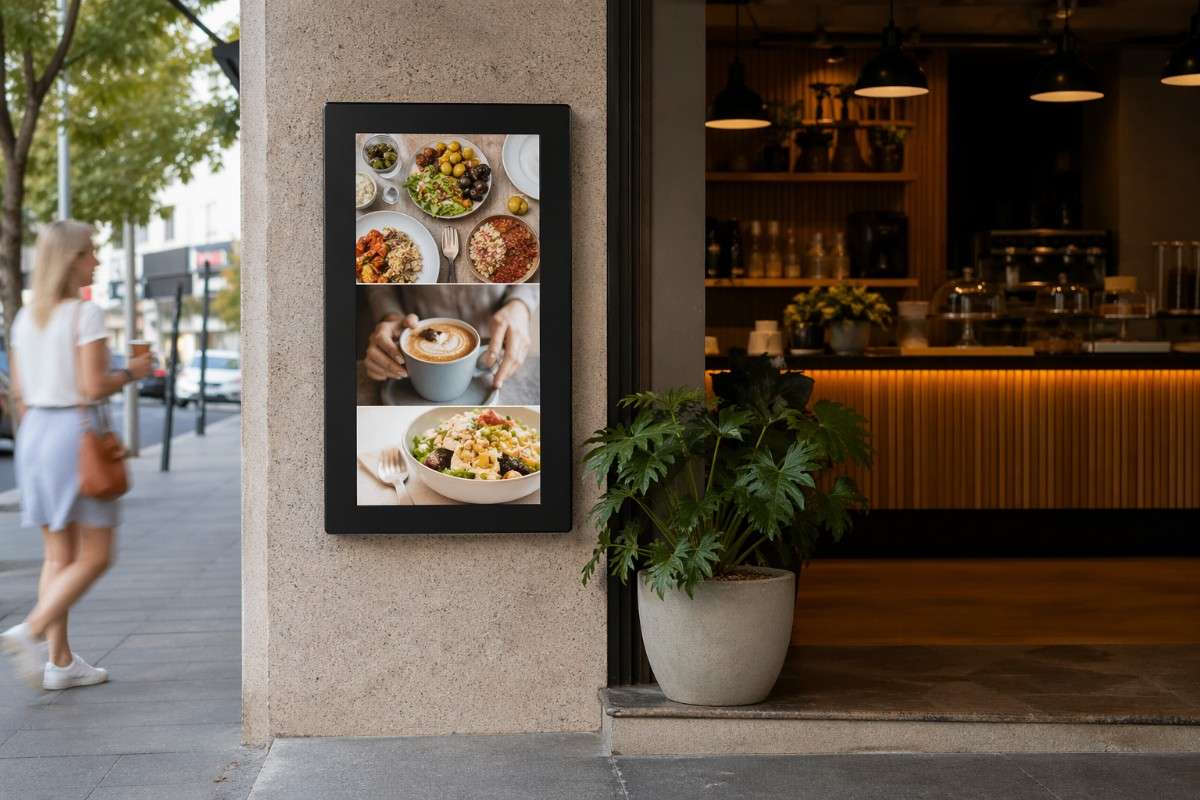
Cafe or Quick Service Restaurant Goal: Digital menu boards across 2 to 3 screens
- Hardware: $2,400 for 3 commercial displays
- Installation: $800
- CMS: $40 per month
- Total Year 1: approximately $3,700 to $5,500
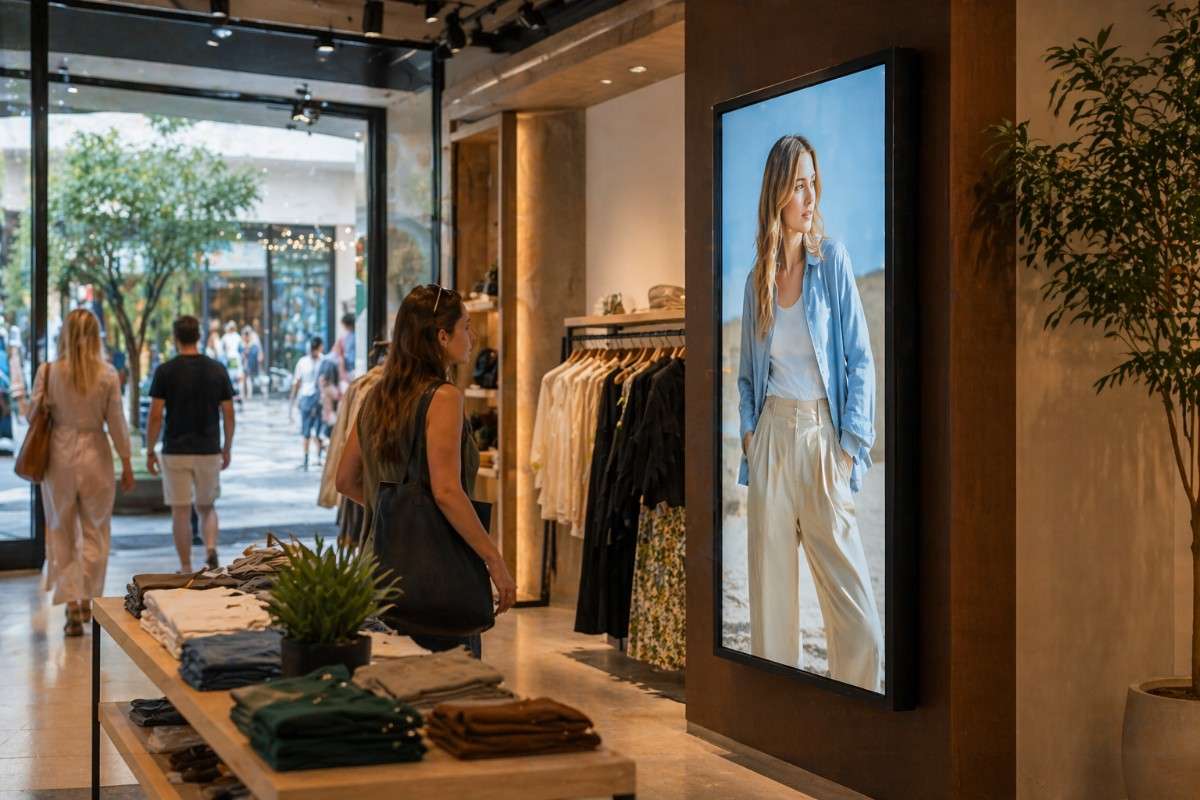
Retail Store (Mid-Size) Goal: Window display plus 2 in-store promotional screens
- Hardware: $6,000 to $9,000
- Installation: $1,500
- CMS plus content updates: $150 per month
- Total Year 1: approximately $10,000 to $13,800
Corporate Office or Lobby Goal: Reception display, wayfinding, and meeting room screens
- Hardware: $8,000 to $15,000
- Installation: $2,500
- Enterprise CMS: $300 per month
- Total Year 1: approximately $14,000 to $22,000
Shopping Centre or Large Retail Goal: LED video wall or multi-zone digital advertising screens
- LED display solutions: $30,000 to $80,000+
- Full installation and integration: $10,000 to $20,000
- Managed content plus CMS: $500 to $1,500 per month
- Total Year 1: $50,000 to $110,000+
6 Mistakes That Make Businesses Overpay for Digital Signage
Even well-informed buyers leave money on the table. Avoid these:
- Buying consumer-grade screens because they fail faster and void warranties in commercial environments
- Ignoring software costs since a cheap screen paired with an expensive CMS can quickly blow your budget
- Underestimating installation complexity, especially for outdoor digital signage with weatherproofing and power requirements
- Not future-proofing the infrastructure, as cabling and mounts should support screen upgrades 3 to 5 years down the line
- Choosing the lowest quote blindly, since cheaper providers may cut corners on brightness ratings, pixel pitch, or refresh rates
- Skipping content strategy entirely, because beautiful screens showing poor content deliver zero ROI
What the ROI Actually Looks Like
Here is the question every decision-maker needs answered: does digital signage pay for itself?
The data says yes, and faster than most businesses expect. Companies using commercial display screens consistently report:
- Up to 33% increase in sales for products promoted on digital menu boards
- Dwell time increases of 30% or more in retail environments with engaging digital displays
- Higher brand recall, as dynamic digital advertising screens outperform static signage by up to 400% in recall tests
- Advertising revenue potential, since larger installations can be monetised by selling screen time to partner brands or suppliers
- Reduced print costs by eliminating recurring printing, design, and installation of static materials
For a mid-size retailer spending $12,000 on a digital signage system, a conservative 10 to 15% uplift in promoted product sales typically recoups the investment within 6 to 12 months.
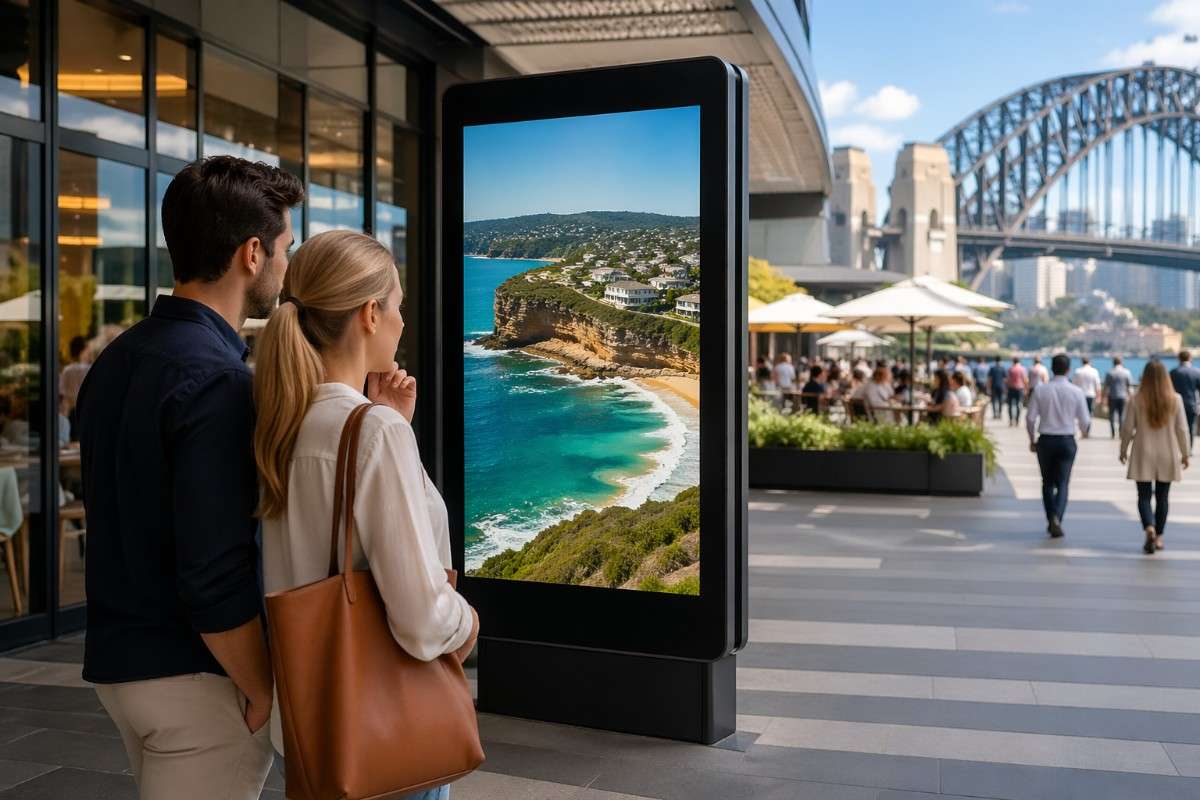
Outdoor Digital Signage: Why It Commands a Premium
Outdoor digital signage is a different beast and is priced accordingly. Screens must withstand Australian sun, rain, dust, and extreme temperatures while maintaining visibility in direct sunlight. This requires 2,500 to 5,000 nits of brightness, compared to 300 to 500 nits for indoor screens.
Key outdoor-specific cost drivers include:
- High-brightness panels with anti-glare and UV-resistant coatings
- IP65+ weatherproof enclosures built for Australian conditions
- Thermal management systems to prevent overheating in summer
- Vandal-resistant housing for street-facing locations
- Planning permits required by some councils, especially for large-format LED display solutions
Expect outdoor installations to cost 2 to 4 times their indoor equivalent. But the visibility and foot traffic impact, particularly for drive-through signage, petrol stations, and street-facing retail, typically justifies the premium.
How to Choose the Right Digital Signage Provider in Australia
Not all providers are equal. When evaluating vendors, ask these questions:
- Do they offer end-to-end service covering hardware, software, installation, and support?
- Can they show a portfolio of installs in your industry?
- What commercial-grade brands do they supply?
- Is their CMS platform scalable as you add more screens?
- What does their post-installation support look like?
- Do they offer a content management service or just the hardware?
Companies like Digital Harbor, based in Sydney and serving clients nationally, specialise in full-service digital signage solutions across retail, hospitality, corporate, and healthcare sectors. Their approach covers everything from initial consultation and hardware selection through to installation, content strategy, and ongoing support, meaning you deal with one partner rather than coordinating multiple vendors.
LED Display Solutions: When to Go Custom
Standard commercial screens work brilliantly for most businesses. But if your space demands something extraordinary, such as a curved video wall, a full-building facade display, or a non-standard size for an architectural installation, custom LED display solutions are the answer.
Custom LED panels offer:
- Any size or aspect ratio to suit your exact space
- Fine or ultra-fine pixel pitch for close-viewing clarity
- Seamless multi-panel configurations for large-format impact
- Both indoor and outdoor variants depending on the environment
- Integration with live data feeds, social walls, and interactive elements
The investment is significant, but for flagship locations, shopping centres, stadiums, and brand experience spaces, custom LED becomes a core business asset rather than just a display.
5 Trends Reshaping Digital Signage Pricing in Australia Right Now
The market is moving fast. Here is what is driving change in 2025:
1. AI-Powered Content Personalisation Screens that adapt messaging based on time of day, weather conditions, or audience demographics are becoming mainstream, adding value without significantly increasing hardware costs.
2. Falling LED Costs Improved manufacturing processes are bringing LED display solutions into reach for mid-size businesses that previously could only afford LCD alternatives.
3. Cloud CMS Commoditisation More affordable SaaS platforms mean smaller businesses can now access enterprise-grade content management tools at a fraction of the previous cost.
4. POS and Inventory Integration Digital menu boards and retail displays that update automatically based on real-time stock levels or pricing are becoming standard, reducing manual content management.
5. Programmatic Digital Out-of-Home Advertising Outdoor digital advertising screens are increasingly being sold via automated ad platforms, opening new revenue streams for business owners with high-traffic locations.
Ready to Get a Real Number for Your Business?
Digital signage pricing is not one-size-fits-all and it should not be. The right investment depends on your space, your goals, your audience, and your growth plans.
Talk to a Digital Harbor expert today. We will assess your requirements, recommend the right hardware and software combination, and give you a clear, itemised quote with no hidden costs, so you can make a confident and informed decision.