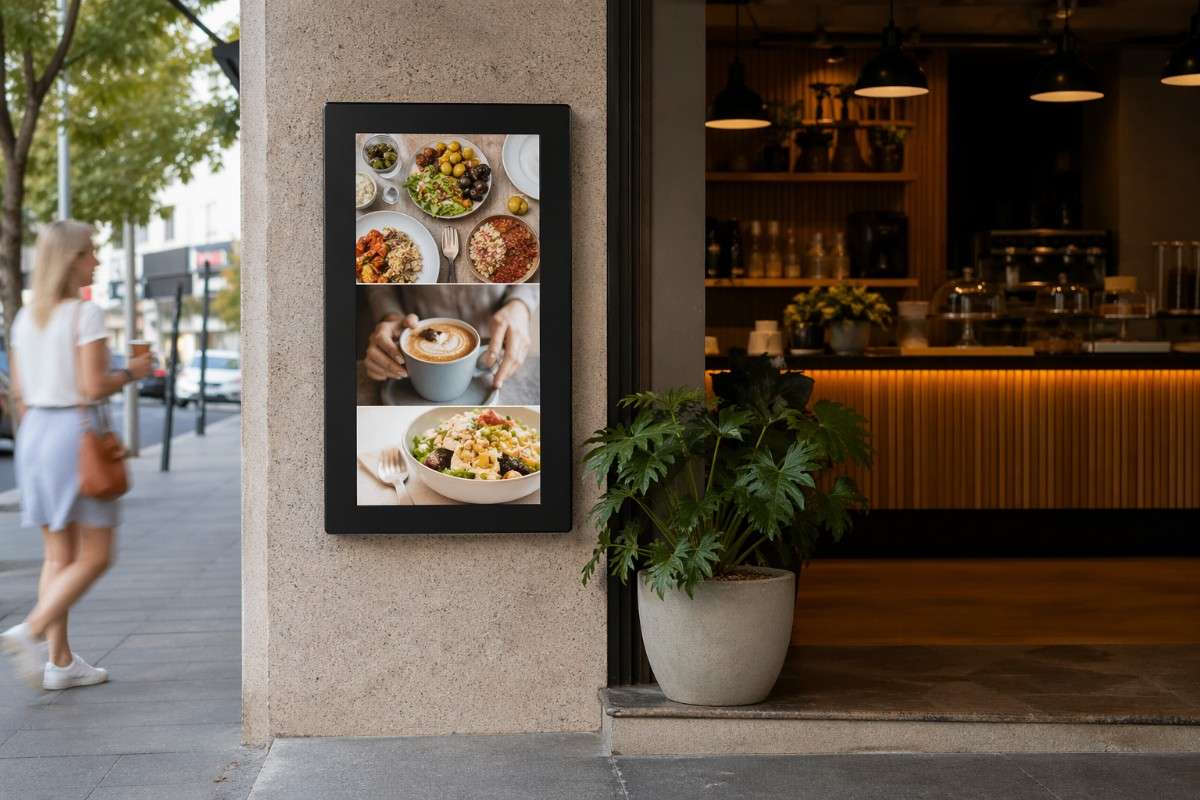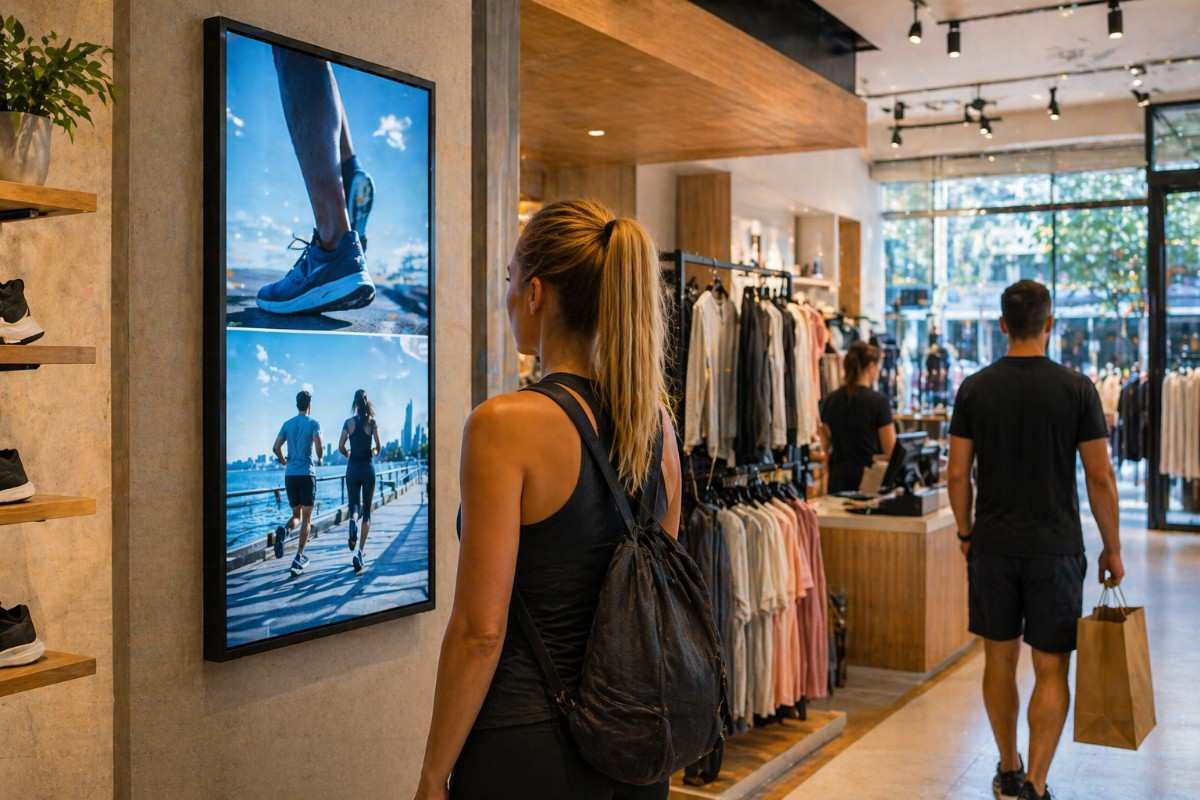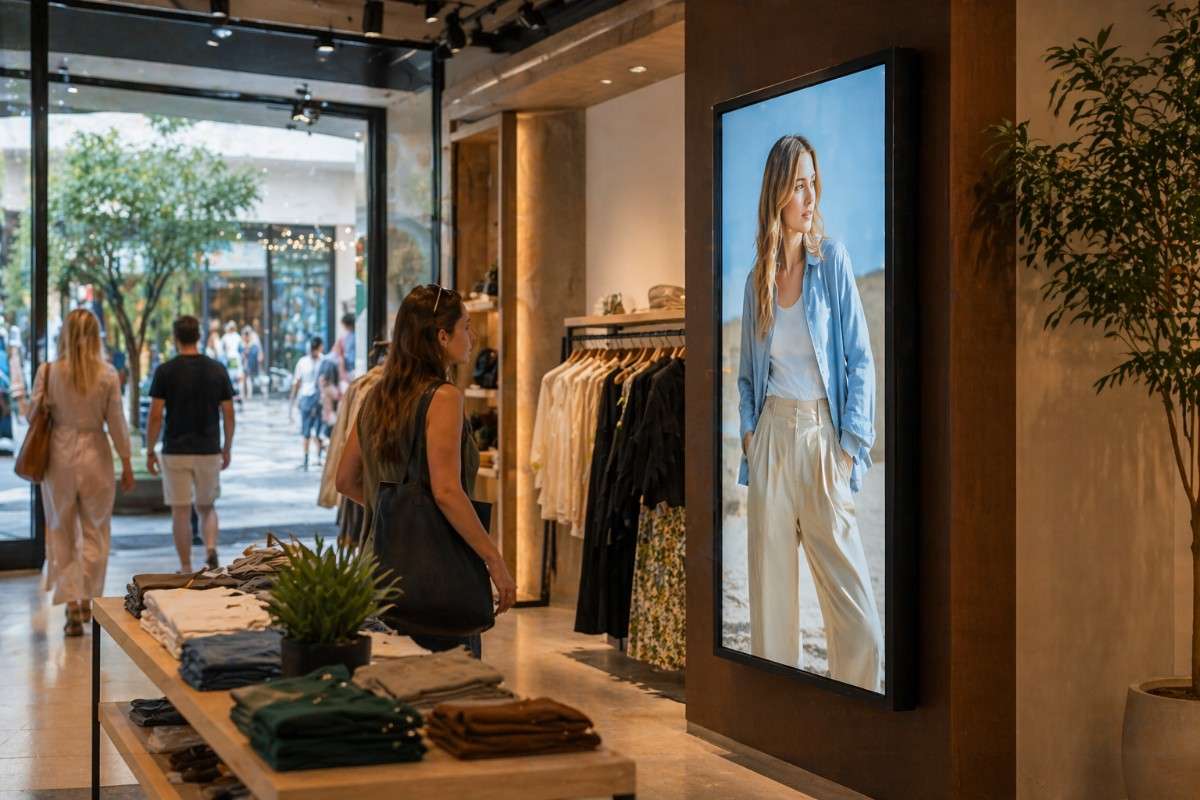
Walk into any high-performing retail store today and you will notice something beyond the products and the layout. The space itself is communicating. Screens positioned at entrances display new arrivals. Displays near checkout counters promote add-ons. Bright window-facing panels stop people on the street before they even consider walking past. This is not coincidence. It is strategy. And the engine behind it is digital signage.
Retail Has a Attention Problem. Digital Signage Is the Fix.
Walk into any high-performing retail store today and you will notice something beyond the products and the layout. The space itself is communicating. Screens positioned at entrances display new arrivals. Displays near checkout counters promote add-ons. Bright window-facing panels stop people on the street before they even consider walking past.
This is not coincidence. It is strategy. And the engine behind it is digital signage.
For Australian retailers navigating tighter margins, increased online competition, and shifting shopper behaviour, digital signage has moved from a nice-to-have into a genuine commercial lever. The stores using it well are not just looking better. They are selling more.
This blog breaks down exactly how retail businesses are deploying digital signage to drive foot traffic, lift basket sizes, and build brands that customers keep coming back to.
First: What Makes Retail Digital Signage Different
Not all digital signage is the same. A screen running a looping video in a corporate lobby serves a very different function from a commercial display screen in a retail environment.
Retail digital signage is purpose-built to influence purchase behaviour. Every placement decision, every content choice, and every scheduling call is made with one goal in mind: moving product and increasing the value of each customer visit.
That means the hardware needs to be bright enough to compete with ambient light. The content management system needs to be fast and flexible enough to keep pace with promotions, seasons, and stock changes. And the placement needs to reflect a deep understanding of how shoppers move through a space.
When all of those elements align, the results are significant. Retailers using LED display solutions strategically report uplift in sales of between 15 and 33 percent on promoted lines, alongside measurable improvements in overall store conversion.
The Six Ways Retailers Are Using Digital Signage Right Now
1. Window Displays That Convert Foot Traffic Into Walk-Ins
The window is the most valuable piece of retail real estate most store owners are underusing. A static poster or a hand-written sign competes poorly against the visual noise of a busy shopping strip. A high-brightness digital window display does not have that problem.
Retailers using outdoor-facing or window-mounted digital advertising screens report meaningful increases in unplanned walk-ins, shoppers who had no intention of entering until something on the screen caught their eye. This is top-of-funnel acquisition happening at zero ongoing media cost, and it works around the clock.
Key retail applications for window digital displays:
- New season or new arrival announcements
- Flash sale and time-limited offer countdowns
- Brand story and lifestyle content that builds emotional connection
- Product demonstrations via short video loops
- Social proof displays showing reviews or user-generated content
2. In-Store Promotion Screens That React to the Sales Calendar
One of the biggest operational advantages of digital signage over print is speed. A retailer running a weekend promotion no longer needs to brief a designer on Monday, approve artwork by Wednesday, and send files to print on Thursday. The promotion can be built, approved, and live on every screen in the store within the hour.
This agility changes how retailers think about promotional strategy. Rather than planning fewer, larger campaigns around long print lead times, stores can run more frequent, targeted promotions that respond to inventory levels, competitor activity, weather, and even time of day.
Commercial display screens positioned throughout the store floor allow retailers to:
- Highlight different products at different times without staff involvement
- Push high-margin lines during peak traffic windows
- Create urgency with countdown timers and limited-quantity messaging
- Cross-sell complementary products at the shelf edge
3. Digital Menu and Product Information Boards
For retailers selling products that require explanation, such as supplements, electronics, skincare, or homewares, digital display boards serve as always-on product educators. Rather than relying on staff to recall and communicate detailed product information, screens can carry that load with accuracy and consistency.
This is particularly effective in high-turnover categories where new products launch frequently. Instead of reprinting shelf talkers and POS materials, store teams update the digital signage content once and every customer who approaches that zone gets the full story.
Benefits for product information displays:
- Consistent messaging delivered without staff training dependency
- Ability to include video demonstrations and before-and-after content
- Instant updates when specifications, pricing, or availability change
- Multilingual content capability for diverse customer bases
4. Queue and Checkout Area Screens That Upsell Passively
The checkout queue is one of the most overlooked sales environments in retail. Customers standing in line have nothing to do but wait. Their attention is available. Their purchase decision is not yet complete.
Retailers who install commercial display screens at or near checkout report measurable increases in last-minute add-on purchases. The content running in these zones typically features:
- Impulse buy products at a low price point
- Loyalty program sign-up prompts
- Gift card and voucher promotions
- Upcoming events or new arrivals to drive return visits
- Positive reviews and testimonials that reinforce purchase confidence
One well-placed LED display in a checkout corridor can pay for itself within a single quarter through incremental upsell revenue alone.
5. Seasonal and Campaign Storytelling at Scale
Large-format video wall displays and multi-screen configurations allow retailers to create immersive brand environments that printed materials simply cannot match. Think of the window installations at major fashion retailers during sale season, or the full-wall display in an electronics store launching a new product.
This kind of environment-level storytelling does something important beyond driving immediate sales. It elevates how customers perceive the brand. A retailer whose store feels dynamic, current, and premium commands higher price points and stronger loyalty than one whose environment feels static and dated.
Digital Harbor has delivered video wall and multi-screen LED display solutions for retail clients across a range of categories, enabling campaign-level visual experiences without the recurring cost of print production.
6. Loyalty, Community, and Social Integration
Forward-thinking retailers are connecting their digital signage to live data feeds, including social media walls, loyalty point displays, and real-time review aggregators. This creates a sense of community and social proof that is uniquely powerful in a physical retail environment.
A screen showing real customer reviews of a product, updated in real time, is far more persuasive than a printed quote on a shelf card. A display showing how many loyalty points a customer has earned this month creates a tangible reason to return.
The Placement Strategy That Changes Everything
Hardware quality matters. Content quality matters even more. But neither will deliver results without intelligent placement.
Retail digital signage experts identify three critical zones in any store:
The Entry Zone: The first three to five metres inside the entrance. Customers are transitioning from outside to inside. They are open to being oriented and impressed. This is where brand storytelling and hero product displays belong.
The Journey Zone: The main floor and aisles where customers move through the store. This is where promotional content, product information screens, and cross-sell displays live. Content here should be specific, product-focused, and action-oriented.
The Conversion Zone: The area around checkout, fitting rooms, and service counters. This is the last touchpoint before the customer leaves. Upsell, loyalty, and return-visit content belongs here.
A retailer who places screens randomly, without reference to customer journey logic, will consistently underperform one who has mapped placement to behaviour.
Mistakes Retailers Make With Digital Signage
Even well-intentioned implementations fall short when these errors occur:
- Screens with outdated content: Nothing destroys credibility faster than a promotion that ended three weeks ago still running on your display. A content management discipline is as important as the hardware itself.
- Too many messages on one screen: Retail digital signage is not a catalogue. One screen, one message, one action. Cluttered screens get ignored.
- Wrong brightness specification: A screen rated for indoor use placed in a sunny window position will wash out completely. Always match the hardware specification to the lighting environment.
- No content refresh cadence: Customers who visit regularly will stop noticing screens that never change. Content should be refreshed at a minimum weekly, and ideally more often for high-traffic locations.
- Ignoring audio: For retailers in enclosed environments, front-facing stereo sound on display units can dramatically increase engagement, particularly for product demonstration content.
What the Investment Actually Looks Like
Australian retailers evaluating digital signage often ask about cost before they ask about outcomes. That is understandable, but it is the wrong starting point.
The more useful framing is: what is the cost of not having it?
Every week your competitor runs a dynamic window display and you do not is a week of foot traffic you did not capture. Every promotion you could not update quickly is a sale you delayed or missed. Every checkout queue that ran without an upsell screen is margin left behind.
Realistic outcomes for a well-implemented retail digital signage strategy:
- Foot traffic increases of 17 to 33 percent from effective outdoor digital signage
- Promoted product sales lifts of 15 to 30 percent on average
- Reduction in print and production costs of 40 to 70 percent annually
- Staff time saved on manual signage updates, redirected to customer service
- Measurable improvement in customer dwell time and return visit frequency
The payback window for most retail installations sits between six and eighteen months. For high-footfall locations with strong promotional cadence, it can be considerably shorter.
How Digital Harbor Supports Retail Businesses
Digital Harbor works with Australian retailers from initial strategy through to installation and ongoing support. That means helping you identify the right hardware for your environment, designing a placement strategy based on your store layout and customer flow, and setting up a content management system your team can actually use without technical expertise.
Whether you need a single high-brightness window display for a boutique, a full video wall for a flagship store, or a network of commercial display screens across multiple locations, the starting point is always a conversation about your goals, not a product brochure.
Ready to See What Is Possible in Your Store?
Digital Harbor offers obligation-free consultations for retailers across Australia. Bring your floor plan, your current challenges, and your growth targets. Leave with a clear picture of what a digital signage strategy could do for your business.
Request your free retail consultation today and start turning browsers into buyers.