Walk into any thriving retail store, busy restaurant, or modern corporate office in Australia today, and one thing stands out immediately: the screens. Not televisions, not printed posters, but smart, dynamic digital signage that communicates, attracts, and converts. Businesses across Australia are rapidly replacing static displays with custom digital signage solutions, and the results are speaking for themselves.
Walk into any thriving retail store, busy restaurant, or modern corporate office in Australia today, and one thing stands out immediately: the screens. Not televisions, not printed posters, but smart, dynamic digital signage that communicates, attracts, and converts. Businesses across Australia are rapidly replacing static displays with custom digital signage solutions, and the results are speaking for themselves.
If your business is still relying on printed banners, chalkboard menus, or outdated LCD screens, this guide is for you. Here is everything you need to know about custom digital signage, why it works, and how to get it right for your specific business environment.
The Problem With Generic, Off-the-Shelf Displays
Most businesses that invest in digital signage for the first time make the same mistake: they buy a standard consumer television, plug in a USB stick, and call it done. The result is a dim, unreliable screen that looks out of place, struggles in bright environments, and requires constant manual updates.
Custom digital signage solves every one of these problems. It is designed around your space, your audience, your brand, and your operational workflow, not around a generic product specification built for living rooms.
The difference between a generic screen and a purpose-built custom display is the difference between a billboard and a piece of paper taped to a window.
What Custom Digital Signage Actually Means
The word "custom" gets used loosely in this industry. Here is what it genuinely means in a professional context:
Custom digital signage refers to display systems that are tailored in one or more of the following ways:
- Screen size and aspect ratio matched to your exact wall, window, or installation space
- Brightness levels calibrated for your environment, whether indoor, semi-outdoor, or fully outdoor
- Enclosure and housing designed to match your interior or exterior aesthetic
- Software and content management configured to your workflow, integrations, and team structure
- Multi-screen configurations, video walls, and LED panel arrays built to your spatial requirements
- Hardware selected for your operational hours, whether that is 8 hours a day or 24 hours, 7 days a week
In short, custom digital signage is not about picking a screen from a catalogue. It is about engineering a display solution around your business goals.
Why Australian Businesses Are Making the Switch in 2026
The shift toward digital signage in Australia is accelerating, driven by falling hardware costs, more accessible cloud-based software, and a growing body of evidence showing measurable business results.
Here is what is driving adoption across industries right now:
- Retailers are replacing printed promotional materials with dynamic commercial display screens that update in real time based on inventory, pricing, and campaigns
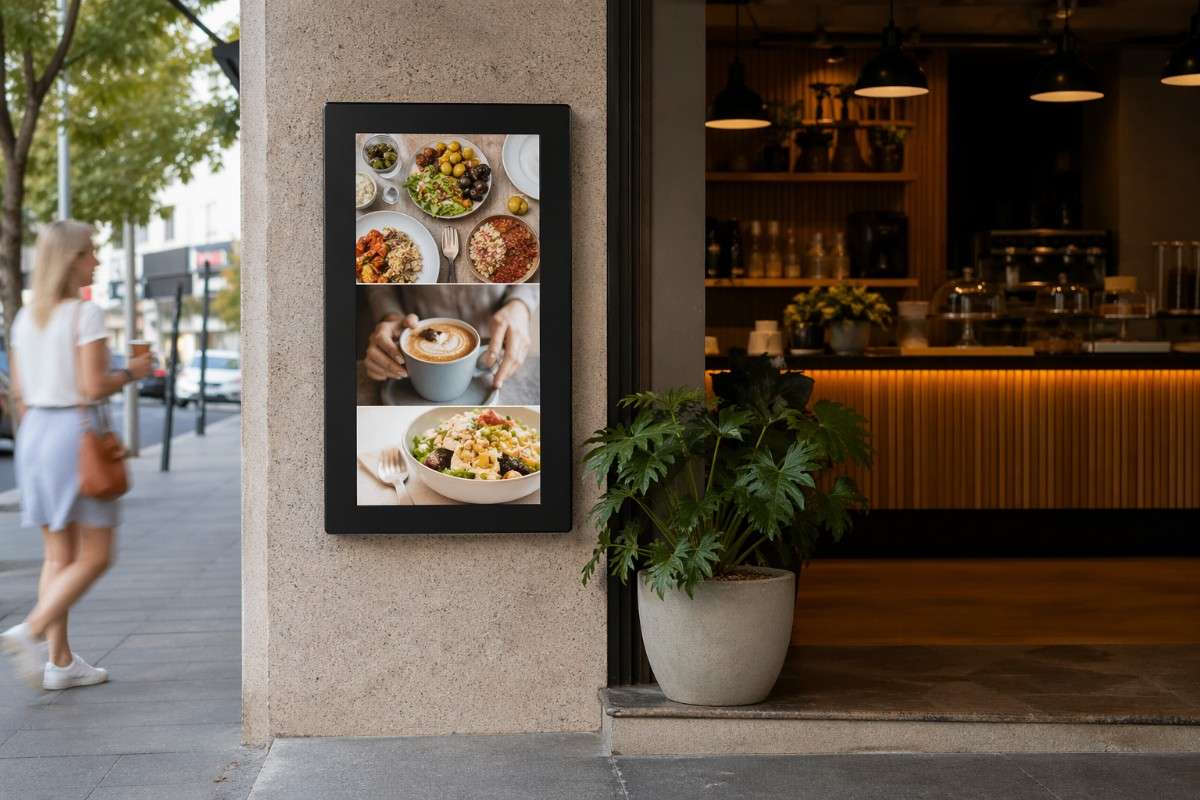
- Restaurants and cafes are switching to digital menu boards that allow instant updates, daypart scheduling, and promotional upselling without reprinting a single menu
- Corporate offices are deploying digital signage networks for internal communications, wayfinding, meeting room management, and visitor experiences
- Healthcare facilities are using digital displays to reduce perceived wait times, communicate safety information, and guide patients through complex environments
- Shopping centres and high-footfall venues are investing in large-format LED display solutions to attract tenants, run advertising campaigns, and create immersive brand environments
The common thread across all of these use cases is this: businesses are treating their physical spaces as communication channels, and digital signage is the medium.
Six Business Problems That Custom Digital Signage Solves
Rather than listing features, here is how custom digital signage addresses real operational challenges that Australian businesses face daily:
Problem 1: Slow and Costly Content Updates Printed signage requires design, print, and installation every time something changes. A custom digital signage system connected to a cloud CMS lets you update every screen across every location in seconds, from your phone or laptop.
Problem 2: Poor Visibility in Bright Environments Standard screens wash out in natural light. Custom high-brightness commercial display screens, rated at 2,500 to 5,000 nits, remain crisp and visible even in direct sunlight, making them ideal for window displays and outdoor digital signage.
Problem 3: Inconsistent Brand Presentation Across Locations Multi-location businesses struggle to maintain consistent visuals. A centralised digital signage network ensures every screen across every site shows the correct, approved content at exactly the right time.
Problem 4: Low Customer Engagement at Point of Sale Static displays have a fraction of the engagement power of dynamic screens. Motion, colour transitions, and video content stop customers mid-scroll and hold their attention far more effectively than any printed poster.
Problem 5: Wasted Advertising Real Estate If your shopfront, lobby, or venue has wall space or window space, it is a potential advertising and communication asset. Custom digital signage turns that dead space into a live, revenue-generating channel.
Problem 6: No Data or Feedback Loop Modern digital signage platforms provide content performance analytics, screen uptime monitoring, and audience engagement data, giving businesses the insight to continuously improve their messaging strategy.
Real-World Use Cases Across Australian Industries
Understanding how other businesses are deploying digital signage in Australia gives practical context for what is possible.
Quick Service Restaurants and Cafes Digital menu boards allow menu items to be updated instantly, limited-time offers to be promoted automatically, and upsell prompts to appear at exactly the right moment in the customer journey. When integrated with a POS system, sold-out items can be removed from the display automatically, eliminating confusion and reducing staff interruptions.
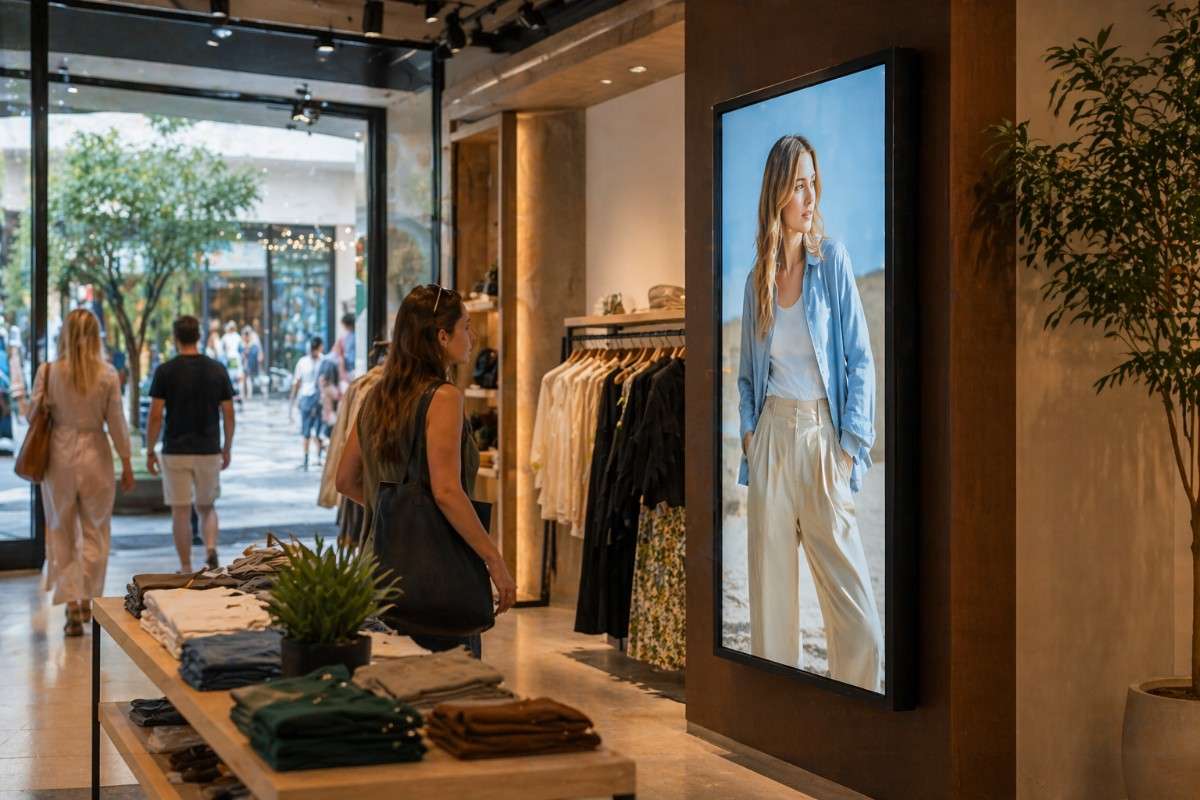
Retail Stores and Boutiques Window-facing digital advertising screens running high-brightness content have been shown to increase foot traffic significantly by catching the eye of passersby who would otherwise walk past. In-store screens near product displays lift conversion by presenting lifestyle content, product demonstrations, and real-time promotional pricing.
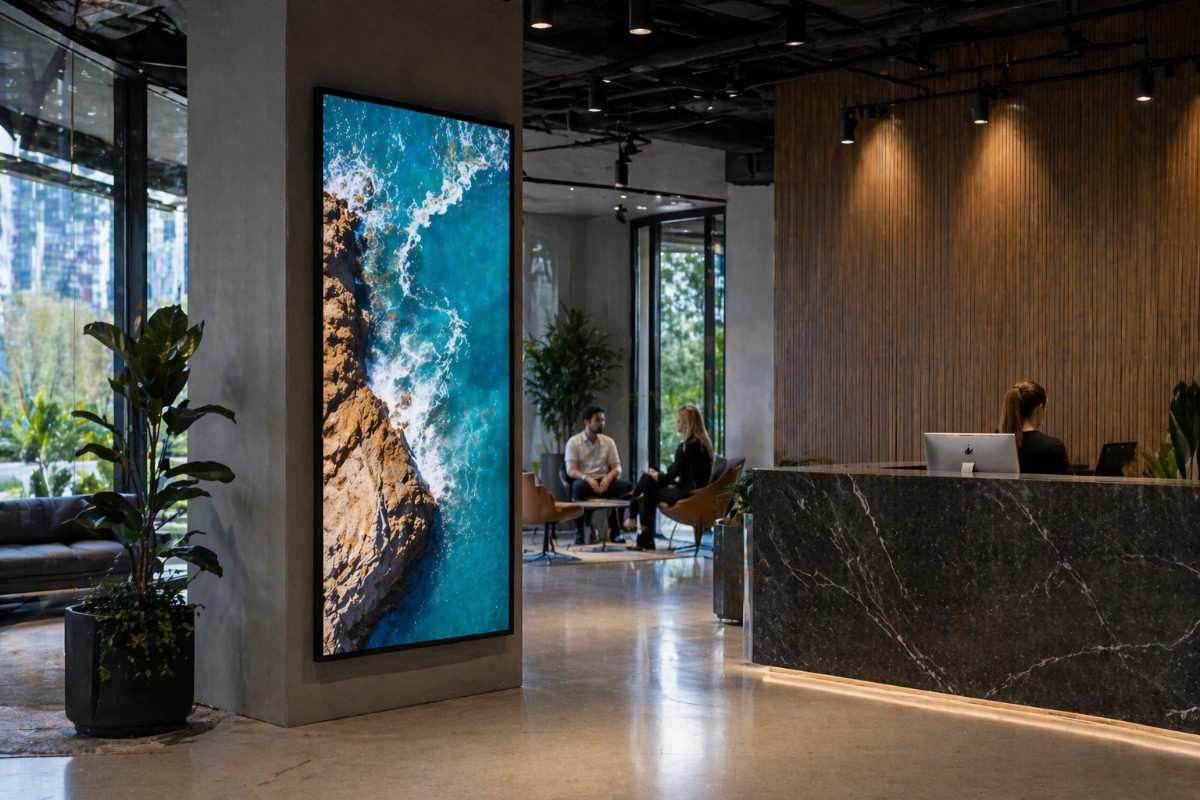
Corporate Offices and Commercial Buildings Reception area digital signage creates a polished first impression for visitors while communicating company values, achievements, and news. Meeting room screens integrated with booking systems eliminate the frustration of double-booked rooms and reduce administrative overhead.
Gyms and Fitness Centres Digital signage in gyms promotes class schedules, membership offers, personal training packages, and motivational content, all without requiring a staff member to stand at a counter and explain every option to every visitor.
Hotels and Hospitality Venues From lobby welcome displays personalised for arriving guests to digital wayfinding maps, conference room signage, and restaurant promotional screens, hotels use digital signage to elevate the guest experience at every touchpoint.
Outdoor Digital Signage: The High-Impact Opportunity Most Businesses Miss
If you operate from a premises with street frontage, a car park entrance, or any outdoor-facing surface, outdoor digital signage represents one of the highest-return investments available to your business.
Outdoor digital advertising screens work around the clock. They speak to pedestrians, drivers, and passersby who have never heard of your brand, seen your social media, or received your emails. They are your 24-hour salesperson standing on the street.
What makes outdoor digital signage different from indoor installations:
- Weatherproof enclosures rated to IP65 or higher for protection against rain, dust, and humidity
- Ultra-high brightness panels between 3,000 and 7,000 nits for full daylight visibility
- Tempered glass or anti-vandal polycarbonate fronts for durability in public spaces
- Thermal management systems to prevent overheating in Australian summers
- Wide viewing angle panels to ensure visibility from multiple approach directions
The investment in outdoor digital signage is higher than indoor equivalents, but the audience reach, brand visibility, and advertising revenue potential justify the premium for most businesses in high-footfall locations.
The Custom Digital Signage Buying Process: What to Expect
If you have never purchased a commercial digital signage system before, the process can feel overwhelming. Here is a simplified breakdown of how it works when you partner with an experienced provider:
Step 1: Discovery and Consultation A professional provider will assess your space, understand your goals, review your existing infrastructure, and identify the right hardware and software combination for your needs. This is not a sales pitch; it is a diagnostic exercise.
Step 2: Solution Design Based on the consultation, your provider will recommend specific screen types, sizes, mounts, media players, and CMS platforms. For custom LED display solutions, this stage may also involve architectural drawings and structural assessments.
Step 3: Content Strategy Hardware without content strategy is a waste of investment. Your provider should help you plan what content you will show, how often it will change, who will manage it, and how it will be structured to achieve your business goals.
Step 4: Installation and Commissioning Professional installation ensures screens are safely mounted, correctly calibrated, network-connected, and fully tested before handover. This stage also includes staff training on the CMS platform.
Step 5: Ongoing Support and Optimisation A quality provider does not disappear after installation. Ongoing technical support, content refresh services, and system monitoring are what separate a long-term partner from a one-time vendor.
Digital Harbor operates across all five of these stages, providing businesses across Australia with genuinely end-to-end digital signage solutions rather than a box dropped at the door.
The ROI Case: What Custom Digital Signage Delivers for Your Business
Every business investment needs to justify itself. Here is what the evidence consistently shows for businesses that implement custom digital signage correctly:
- Increased foot traffic into physical locations driven by eye-catching outdoor and window displays
- Higher average transaction values through in-store upselling and promotional content shown at the point of purchase
- Stronger brand visibility and recall, as dynamic digital content is processed and remembered far more effectively than static alternatives
- Reduced operational costs through the elimination of recurring print, design, and installation expenses for promotional materials
- Advertising revenue potential for high-footfall locations by selling screen time to partner brands, suppliers, or complementary businesses
- Faster promotional responsiveness, allowing businesses to react to competitor activity, weather changes, or inventory situations in real time
Five Mistakes to Avoid When Investing in Digital Signage
Even well-intentioned digital signage projects go wrong. Here are the most common pitfalls:
- Choosing consumer-grade televisions instead of commercial-grade displays, which results in screen failures, warranty voids, and poor image quality within months
- Neglecting content planning, because a beautifully installed screen showing irrelevant or poorly designed content achieves nothing
- Underestimating ongoing software costs by focusing only on hardware price during the buying decision
- Installing screens without professional calibration, which leads to incorrect brightness levels, colour inaccuracies, and poor viewing angles
- Working with providers who offer hardware only, leaving you without support, training, or content management guidance after installation
Is Your Business Ready for Custom Digital Signage?
Whether you operate a single cafe in Sydney or a national retail chain with 50 locations, there is a custom digital signage solution scaled to your needs and your budget. The question is not whether your business can afford digital signage. The question is whether you can afford to keep communicating with your customers the same way your competitors stopped doing five years ago.
Talk to a Digital Harbor expert and request your tailored quote today. Our team will assess your space, recommend the right solution, and give you a clear investment figure with no hidden costs.
Visit digitalharbor.com.au to get started.