Every square metre of your business space is either working for you or it is not. While your staff handle customers and your website captures online traffic, there is a powerful middle layer most Australian businesses are still ignoring: digital signage.Digital signage is not just about replacing a printed poster with a glowing screen. When deployed strategically, it functions as a tireless, always-on sales tool that influences purchasing decisions at exactly the right moment, when your customer is already inside your space, wallet in hand.
The Silent Salesperson You Are Not Using Yet
Every square metre of your business space is either working for you or it is not. While your staff handle customers and your website captures online traffic, there is a powerful middle layer most Australian businesses are still ignoring: digital signage.
Digital signage is not just about replacing a printed poster with a glowing screen. When deployed strategically, it functions as a tireless, always-on sales tool that influences purchasing decisions at exactly the right moment, when your customer is already inside your space, wallet in hand.
The numbers back this up. Studies consistently show that digital signage can increase average transaction value by up to 30%, and businesses that use commercial display screens report measurable lifts in both impulse purchases and brand recall.
Why This Matters More in 2025 Than Ever Before
Consumer attention is fragmenting. People are bombarded with content on their phones, laptops, and social feeds. The one environment where you still have their undivided focus is your physical space.
That is the strategic advantage of digital signage Australia businesses are beginning to capitalise on. When someone walks into your store, restaurant, clinic, or showroom, they are physically present and mentally open. A well-placed LED display solution at that moment is worth more than any digital ad you could serve them online.
This is not a trend reserved for big retailers or franchise chains. With accessible hardware and cloud-based content management, businesses of every size can now deploy professional-grade digital advertising screens that were once only affordable for large corporations.
What Exactly Is Digital Signage?
At its core, digital signage refers to any screen-based display system used to communicate with an audience in a physical location. This includes:
- Window displays that pull foot traffic off the street
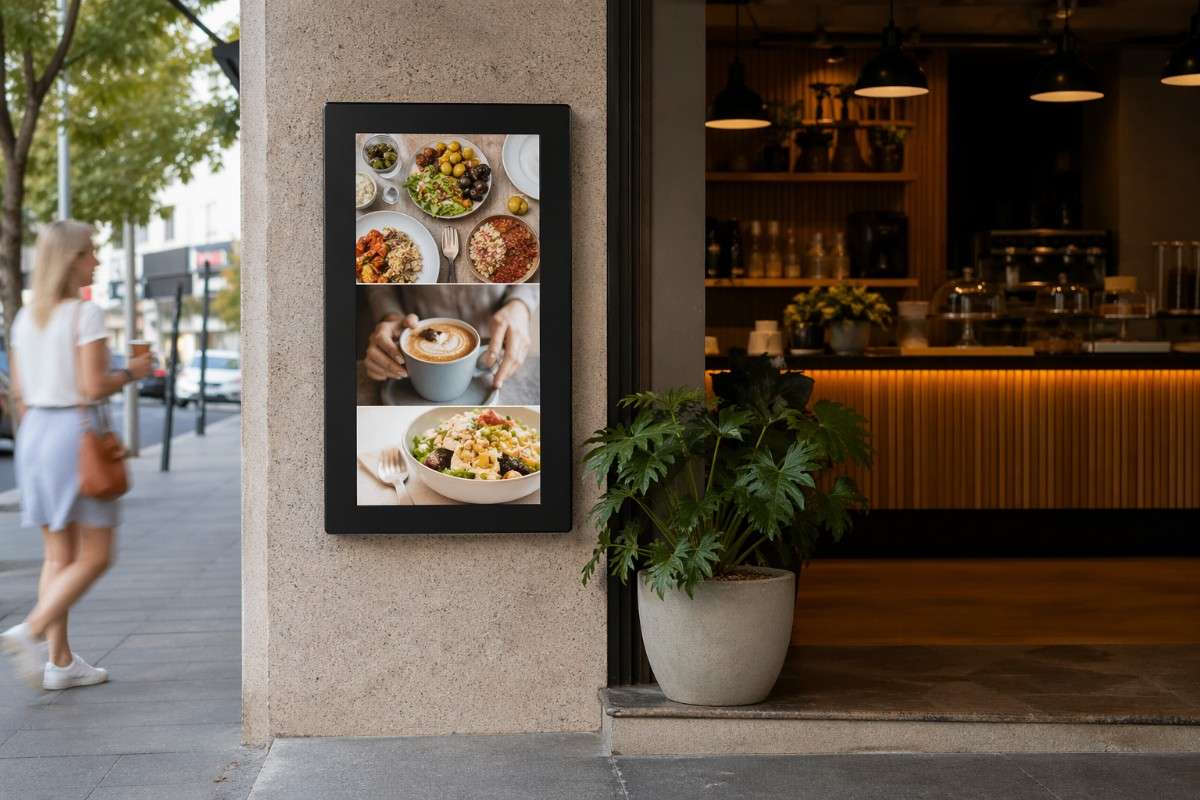
- Digital menu boards in cafes, restaurants, and quick-service outlets
- Interactive touchscreen kiosks in retail and healthcare environments
- Video wall displays in showrooms, hotels, and corporate lobbies
- Outdoor digital signage panels on storefronts, forecourts, and drive-thrus
- LED display solutions for high-visibility advertising in commercial precincts
What separates modern digital signage from a television running a slideshow is the intelligence behind it. Today's systems allow you to schedule content by time of day, update promotions remotely, display live data feeds, and even trigger content based on external conditions like weather or footfall.
Six Ways Digital Signage Directly Increases Sales
This is where it gets practical. Here is how commercial display screens translate into real revenue for your business.
1. Promoting High-Margin Products at the Point of Decision
The moment a customer is standing in your space is your most valuable conversion opportunity. Digital signage lets you spotlight your best-margin products or services with motion, colour, and urgency in a way that static print simply cannot. A cafe displaying a seasonal special on a bright digital menu board will always outsell the same special written on a chalkboard.
2. Reducing Perceived Wait Time and Increasing Upsell Opportunities
Research shows that engaging digital content can reduce perceived wait time by up to 35%. While customers wait, whether at a counter, in a queue, or in a reception area, well-crafted content on commercial display screens can introduce them to products or services they did not know you offered. That is a passive upsell with zero staff involvement.
3. Creating Urgency With Time-Sensitive Offers
Printed signage cannot change without cost and effort. Digital signage can. You can push a lunchtime deal at 11:45am, switch to a dinner promotion at 5pm, and run a weekend-only offer automatically, all from a single dashboard. Scarcity and time pressure are proven sales drivers, and digital signage lets you deploy them with precision.
4. Strengthening Brand Consistency Across Every Touchpoint
Inconsistent branding erodes trust. When your digital advertising screens display polished, on-brand visuals, it elevates the perceived quality of your business. Customers who trust your brand spend more, return more often, and refer others.
5. Capturing Attention From the Street
Outdoor digital signage is one of the most underutilised assets in Australian retail. A high-brightness LED display in your window or mounted externally can stop foot traffic and convert passersby into walk-in customers. This is top-of-funnel acquisition happening right at your front door, at no ongoing media cost.
6. Supporting Staff Without Replacing Them
Digital signage does not replace your team. It equips them. When screens handle product education, pricing, and promotions, your staff can focus on relationship-building and closing. That shift alone can meaningfully increase your conversion rate.
Real-World Use Cases Across Industries
Digital signage is not a one-size-fits-all product, and the businesses getting the most from it understand how to apply it to their specific context.
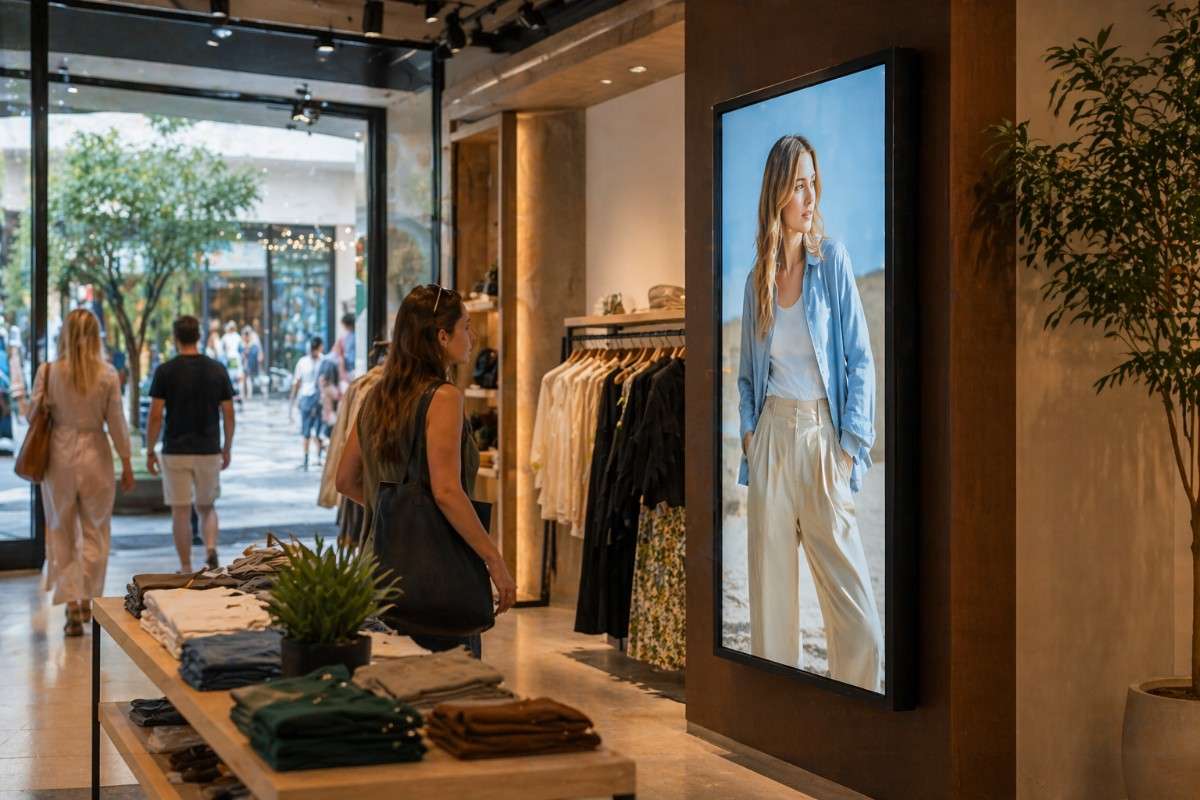
Retail Stores: Window digital displays drawing foot traffic in, in-aisle screens highlighting promotions, and interactive kiosks enabling self-service product discovery.
Cafes and Restaurants: Digital menu displays that update in real time, reducing printing costs and enabling dynamic pricing. Seasonal items and limited offers drive higher ticket sizes.
Healthcare and Allied Health: Waiting room screens that educate patients, reduce anxiety, and cross-promote services like health checks, supplements, or specialist referrals.
Automotive and Showrooms: Video wall displays showcasing vehicle features, financing options, and lifestyle content that builds emotional connection before a salesperson even speaks.
Gyms and Fitness Centres: Class schedules, membership promotions, and motivational content that increases retention and drives referrals.
Corporate Environments: Lobby displays that reinforce company culture, communicate KPIs, and impress clients before meetings begin.
Digital Harbor has delivered LED display solutions across all of these verticals, with installations spanning Sydney and beyond.
The ROI Case: What to Expect From Your Investment
Decision-makers want numbers, not just stories. Here is a realistic breakdown of the business impact you can expect from a well-implemented digital signage strategy:
- Increased foot traffic: Outdoor digital signage can lift walk-ins by 17 to 33% depending on location and content quality
- Higher average transaction value: Strategically placed upsell screens have been shown to lift basket sizes by 15 to 30%
- Reduced content production costs: Eliminating recurring print costs pays back a significant portion of your hardware investment within the first year
- Faster promotion turnaround: What previously took days to design, print, and install now takes minutes to update remotely
- Advertising revenue potential: High-footfall locations can monetise screen space by running third-party advertising, turning a cost centre into a revenue stream
- Improved staff efficiency: Less time spent manually updating signage means more time serving customers
The payback period for most commercial display screen installations in retail and hospitality ranges from six to eighteen months, depending on scale and content strategy.
Common Mistakes Businesses Make With Digital Signage
Buying screens is the easy part. Getting results requires avoiding these pitfalls:
- Overloading screens with too much text: Digital signage is not a document. Three seconds of attention is the benchmark. Design for glance-ability, not reading.
- Setting and forgetting content: Outdated promotions destroy credibility. Content needs to be actively managed and refreshed on a regular cycle.
- Ignoring screen placement and viewing angles: A screen that faces the wrong direction, or is washed out by sunlight, delivers zero impact. Installation planning matters enormously.
- Choosing the wrong brightness for the environment: Indoor and outdoor environments require very different specifications. An indoor-rated screen placed in a window will be invisible in daylight.
- No clear call to action: Every piece of content should tell the viewer what to do next. Buy now. Ask us about this. Scan here. Without direction, interest does not convert.
A reliable LED display solutions provider will guide you through all of these decisions before a single screen is installed.
What to Look for When Choosing a Digital Signage Partner
Not all providers are equal. When evaluating your options for digital signage in Australia, ask these questions:
- Do they offer end-to-end service including hardware, software, installation, and ongoing support?
- Can content be managed remotely through a simple dashboard or mobile app?
- Do they provide custom sizing and configurations for unusual or complex spaces?
- What is their track record with businesses in your industry?
- Is there a warranty and a clear support process if something goes wrong?
Digital Harbor operates as a full-service digital signage partner, handling everything from initial consultation and hardware selection through to installation and long-term content management support. Their team works across indoor and outdoor environments, with custom LED display solutions built for the specific demands of Australian businesses.
Trends Shaping the Future of Digital Signage
The category is evolving fast. Here is what forward-thinking businesses are already exploring:
- AI-driven content personalisation: Screens that adapt displayed content based on audience demographics detected via camera
- Integration with POS and inventory systems: Promotions that automatically update when stock levels change
- Interactive and touchscreen experiences: Customers engaging directly with screens to browse, configure, or purchase
- Sustainability-focused hardware: Lower power consumption LED display solutions that reduce energy costs and environmental footprint
- Programmatic outdoor advertising: Digital advertising screens connected to ad exchanges, enabling dynamic revenue generation
Businesses that invest in scalable, software-driven systems now will be positioned to adopt these capabilities as they mature.
Talk to an Expert Before You Buy
If you are evaluating digital signage for the first time, or looking to expand an existing setup, the worst thing you can do is make a hardware decision without a content and placement strategy behind it.
Digital Harbor offers obligation-free consultations for Australian businesses ready to explore what is possible. Whether you need a single window display for a boutique retail shop or a full LED display network across multiple locations, the conversation starts with understanding your goals, not pushing a product.
Book a free expert consultation with Digital Harbor today and find out exactly what digital signage can do for your revenue.